Starboard 7'10" x 28" Pro Review | 104L Carbon SUP for Florida Surf
- Posted on
- Posted in Cocoa Beach paddle board, Florida surf SUP, performance SUP review, Starboard 7'10 Pro, SUP surf board
- 0
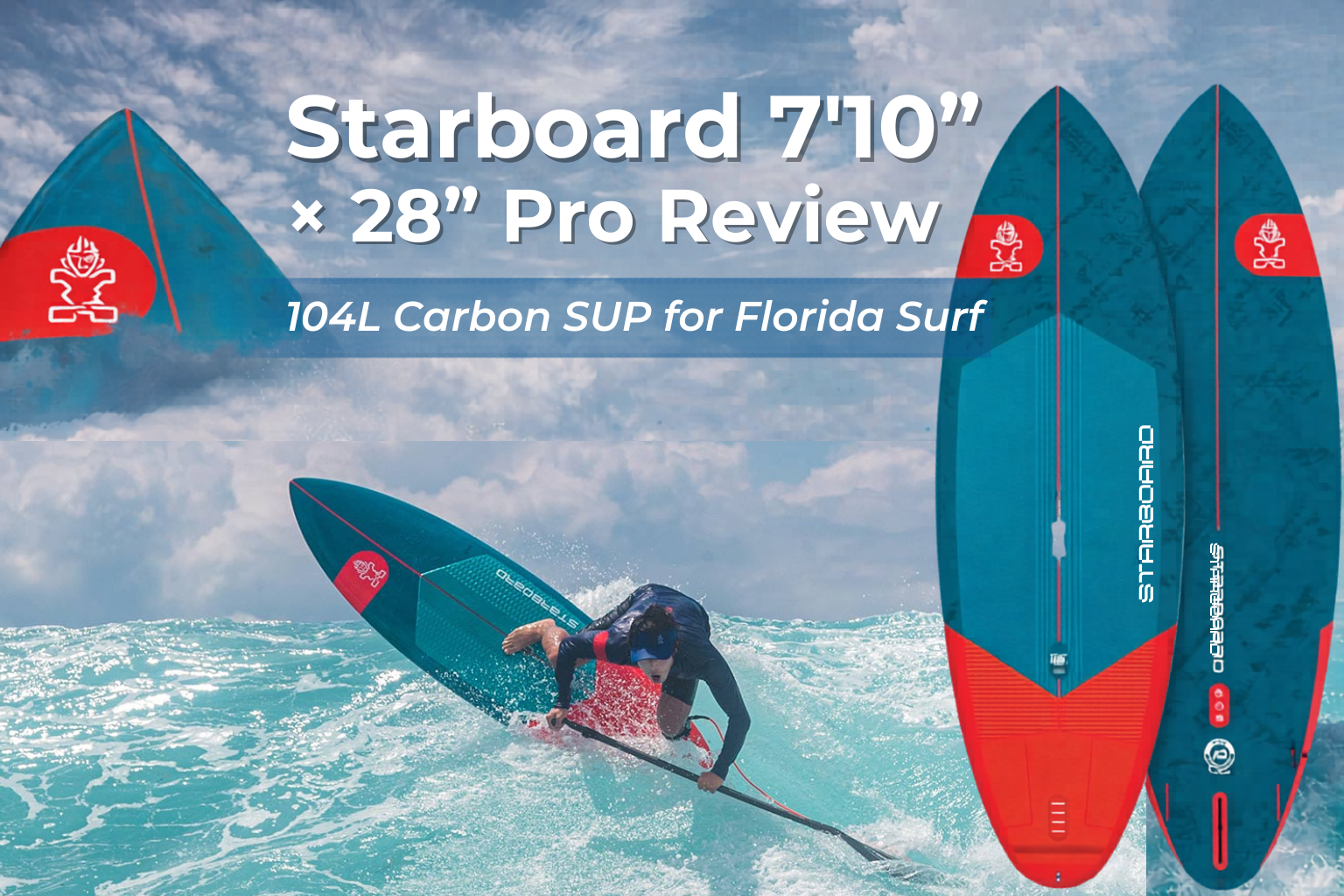
A detailed review of the Starboard 7'10" x 28" Pro for Florida surf. Learn how 104 liters, 28-inch width, carbon construction, and quad vs 2+1 fin setups affect stability, speed, and control in Cocoa Beach beach break.
Starboard 7'10" x 28" Pro Review: Is It Right for Florida Surf?
If you are considering the Starboard 7'10" x 28" Pro, you are looking at a true performance SUP surf shape.
At 7'10", 28 inches wide, and 104 liters, this board is built for engagement, not forgiveness. The carbon construction has remained consistent from 2023 through 2026, meaning the shape you are evaluating today is the same performance platform advanced riders have been choosing in real surf conditions.
Jennifer from Epic has watched this shape move through multiple seasons without structural redesign, which gives experienced riders confidence in what they are getting.
This is not a crossover cruiser. It is designed to sit deeper in the pocket, respond quickly off the tail, and handle larger wave energy without feeling oversized.
It is not built for casual lagoon cruising or first-week balance practice.
Why Is the Starboard 7'10" x 28" Pro Considered an Advanced SUP Surf Board?
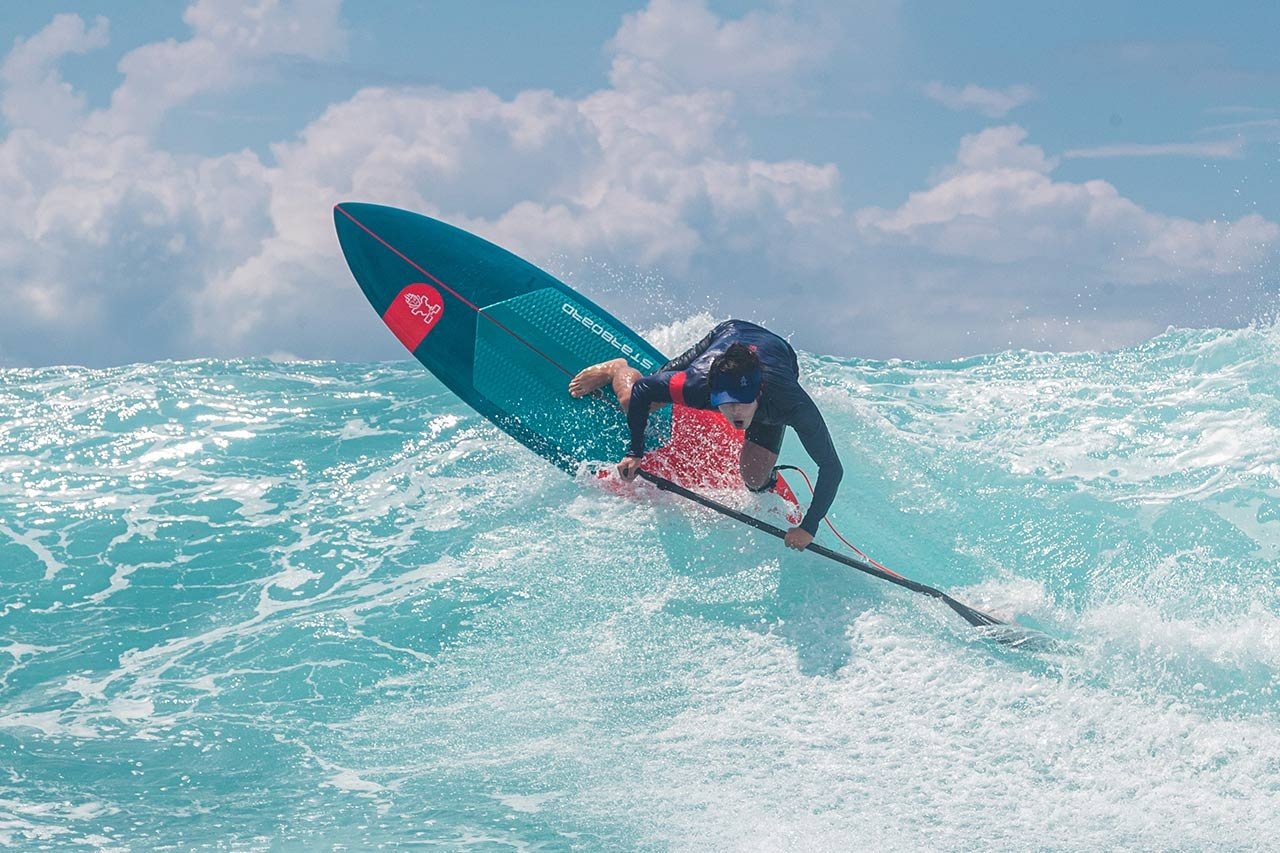
The dimensions tell the story immediately.
7'10" length.
28" width.
104 liters of volume.
At 28 inches wide, this board removes the comfort buffer that many intermediate paddlers rely on. It reacts faster to weight shifts. It rolls rail to rail more quickly. That sensitivity is what experienced riders want in punchier surf.
The pulled-in nose reduces swing weight at the front of the board. That makes direction changes quicker once you’re setting a rail and driving off the tail. Instead of pushing water in front of you, the board engages the face and allows tighter positioning.
The squash tail reinforces that performance intent. In larger or more powerful waves, the squash tail gives a balanced combination of release and hold. It provides a defined pivot point when you load the back foot, which is critical once the wave has real energy.
This is where we separate rider levels.
⤷ For advanced intermediates, this board feels like a progression step. It challenges balance at rest but rewards clean tail-driven turns.
⤷ For advanced riders, it becomes a responsive performance tool when waves carry power. The stability comes from deck distribution, but the rails and outline are built for engagement, not forgiveness.
If you are still bracing for balance in chest-high surf, this shape will feel demanding. If you are already driving through turns and looking for faster response, it will feel alive.
What Does 104 Liters Feel Like in Real Florida Surf Conditions?
Volume numbers only matter once you understand how they behave in real water.
At 104 liters, the 7'10" x 28" Pro sits in a performance range. It is not ultra-low volume, but it is not forgiving either. In Florida beach break, that means you feel more connected to the water instead of floating high above it.
In smaller summer waves around Cocoa Beach, 104 liters requires active balance while waiting for sets.
Once the wave has push, though, that lower float becomes an advantage. The board settles into the face instead of bouncing over surface texture. It feels planted rather than corky. That controlled engagement is what advanced riders want when the wave has shape.
For advanced intermediates stepping up from something wider or higher volume, this is the moment of adjustment. The board will feel slightly less stable at rest, but more precise once moving. That trade-off defines the performance category.
How Does the Flat Deck and Domed Rail Design Change Stability and Control?
The deck on the 7'10" Pro is relatively flat through the standing area. That flatness creates a stable platform for a 28-inch-wide board. It gives your feet consistent contact and reduces the “tippy” sensation some narrow boards create.
But stability is only half the story.
As the board transitions toward the rails, the shape becomes more domed. That dome allows the rail to engage smoothly when you lean into a turn. Instead of abruptly catching, the board rolls progressively from flat to rail.
In Florida surf, where waves can be punchy but not long-period, that smooth transition matters. You often need to set a rail quickly after takeoff. The domed rail allows a controlled lean without the board feeling sticky or delayed.
Flat deck for standing comfort. Domed rails for engagement. Two different jobs, working together.
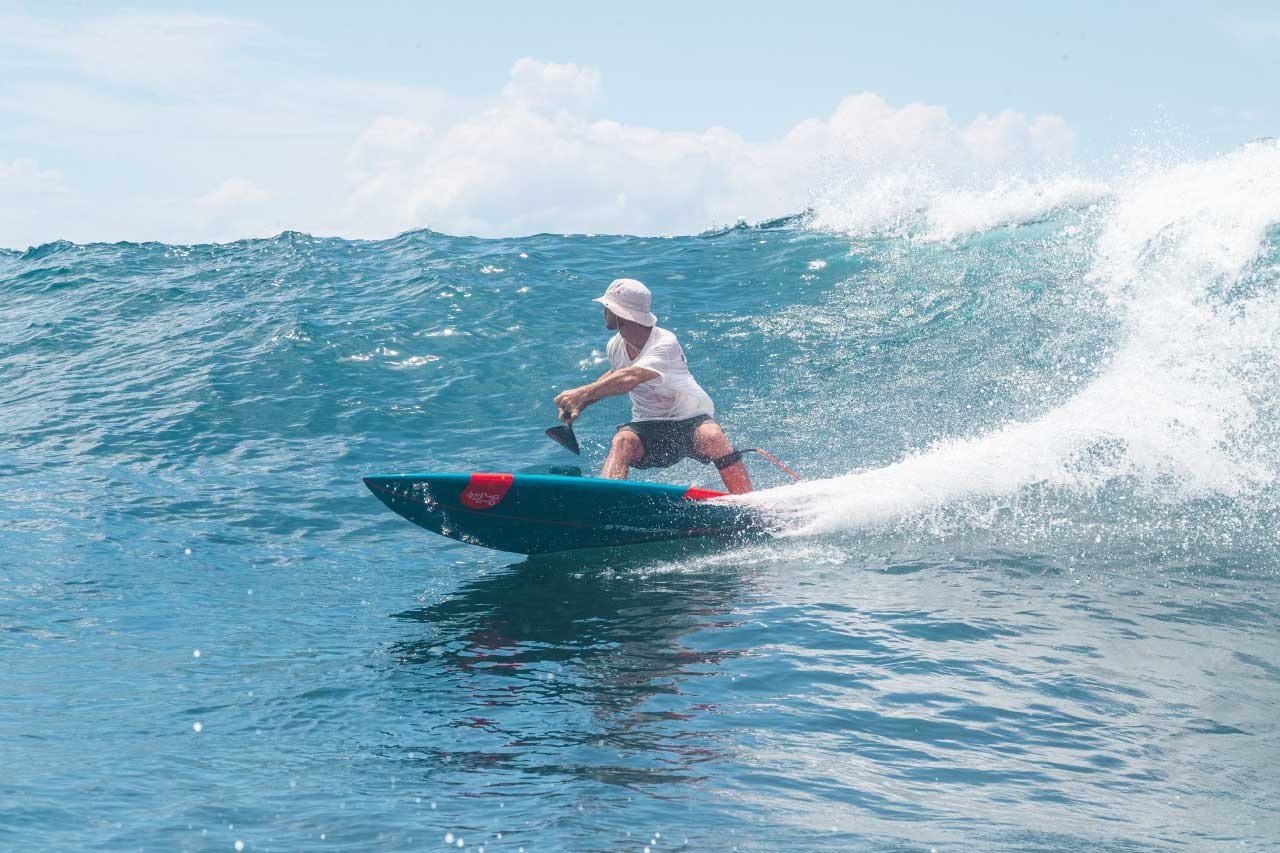
Quad vs 2+1: Which Fin Setup Works Best in Florida Beach Break?
Jennifer mentions that this board comes stock in a 2+1 setup, with side bites and a center fin. It also allows a quad configuration. The difference between those setups changes how the board feels in Florida conditions.
In smaller, softer beach break, a quad setup can help maintain speed. Removing the center fin reduces drag and increases drive down the line. On mushy days, that extra speed helps you connect sections.
The 2+1 setup, with a center fin installed, provides more pivot and directional control. In more powerful surf, or when the wave face has more push, the center fin gives you a defined anchor point when loading the tail.
This is not about better or worse. It is about conditions.
Summer Cocoa Beach with weaker waves may favor a quad.
More organized swell with stronger faces may feel more controlled in a 2+1 configuration.
The benefit of the FCS2 fin boxes is flexibility. You can change the feel of the board without changing the board itself. For riders who understand fin dynamics, that adjustability becomes part of the tuning process rather than an afterthought.
How Much Rider Weight Does 104 Liters Actually Support?
Volume numbers without rider weight context are meaningless.
At 104 liters, this board sits in a performance range that will feel very different depending on rider size.
For riders under 170 lbs, 104 liters can feel lively but manageable. There is enough float to wait comfortably for sets while still keeping a performance feel once moving.
For riders between 170 and 200 lbs, this volume becomes more technical. Stability at rest requires attention. Once on the wave, however, the board feels responsive and engaged rather than oversized.
For riders above 200 lbs, 104 liters enters step-up territory. It may work in strong, powerful waves where water energy supports the board, but it will not feel forgiving in weaker conditions.
The key distinction is this:
104 liters is not about comfort standing still. It is about performance once the wave face engages.
If your priority is relaxed stability in between sets, you likely need more volume.
If your priority is control under speed, this volume range makes sense.
At 28 inches wide, this board sits firmly in performance territory.
The real question is not whether 28 inches is “too narrow.”
The real question is whether your skill level matches what 28 inches demands in Florida beach break.
Florida surf is short-period. It often includes cross-chop, side wind, and unpredictable reform sections. A narrower board reacts quickly to all of that.
At rest, 28 inches requires active balance. You are not standing casually between sets. Your feet need to stay engaged, especially in textured water.
In motion, however, 28 inches becomes an advantage. The board transitions rail to rail faster. It responds more directly to back-foot pressure. It holds a higher line on the wave face with less delay.
Here is a practical readiness filter:
You are likely ready for 28 inches if:
• You can pivot turn consistently without falling.
• You can paddle through broken whitewater without stepping off.
• You generate speed by pumping instead of relying on wave push.
• You can recover from rail-to-rail transitions without bracing.
You are probably not ready if:
• You struggle balancing in chest-high chop.
• You need constant micro-corrections while waiting for sets.
• You are still learning foot placement during takeoff.
• Width is not about ego. It is about control.
On clean hurricane swell days, 28 inches feels precise.
On windy summer afternoons, it feels technical.
That is not a flaw. It is the design doing exactly what it was built to do.
What Wave Size Range Is the Starboard 7'10 Pro Built For?
This board is not limited to one wave size, but it does have a sweet spot.
In knee-high, weak summer waves, the 7'10 Pro can feel slightly oversized unless you are actively generating speed. It will still work, especially in quad mode, but it is not optimized for tiny, slow conditions.
From waist-high to overhead surf, the shape begins to show its purpose.
The pulled-in outline helps it sit cleanly in steeper faces. The squash tail provides release without losing hold. The narrower width allows quicker transitions when the wave has energy.
On hurricane swell days along the Space Coast, this board becomes more comfortable. As waves gain power, the design elements start working with the water instead of against it.
Does Carbon Construction Make a Noticeable Difference in Performance?
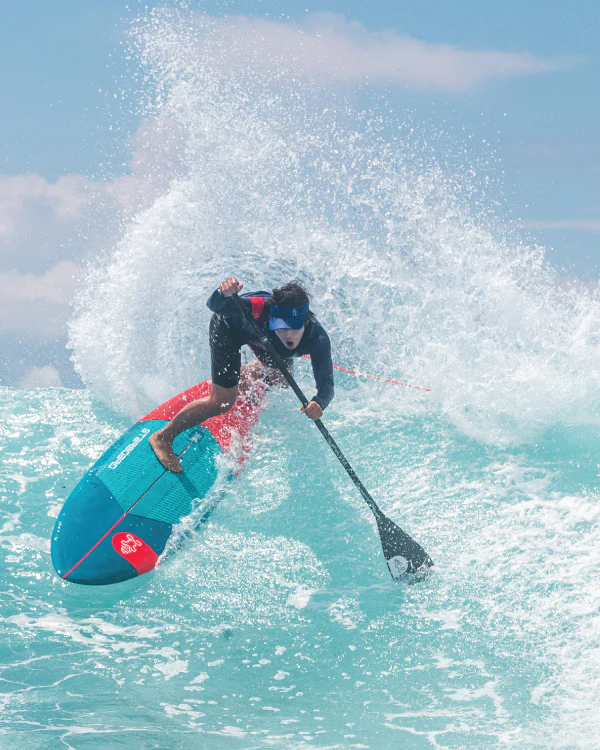
Carbon construction is not just about weight savings.
On a performance surf SUP, stiffness changes how energy transfers through the board.
When you load the tail during a turn, a stiffer carbon construction responds immediately. There is less delay between input and reaction. That crisp response is noticeable when driving through a bottom turn or redirecting off the lip.
In choppy Florida conditions, carbon also helps maintain structural integrity under speed. The board feels composed rather than flexy when pushing through textured water.
For casual paddlers, this difference may feel subtle. For advanced riders pushing harder through turns, it becomes obvious.
Carbon rewards precision. It does not hide mistakes.
Is the Starboard 7'10 Pro a Daily Driver or a Step-Up Board?
This depends entirely on rider skill and local conditions.
For an advanced intermediate in Cocoa Beach, this could be a daily performance board when the waves have shape. It will feel technical on weaker days, but still usable with proper fin tuning.
For a highly advanced rider, this could be a go-to board for chest-high to overhead surf. On smaller days, they may prefer something looser and more playful. On larger days, they may step into something slightly longer with more hold.
For riders still progressing through fundamentals, this should not be a daily driver. It will feel demanding and unforgiving in inconsistent beach break.
The distinction is not about ability alone. It is about how often you surf in conditions that justify a 28-inch performance shape.
How Does the Starboard 7'10" Pro Paddle Back Out Through Whitewater?
Performance boards are not judged only by how they ride waves. They are judged by how they handle the reset.
At 7'10" and 28 inches wide, this board is narrow enough that paddling back out through broken surf requires precision. You cannot stand casually and drift over foam piles. You have to time your strokes and stay centered.
The pulled-in nose helps here. Because there is less width up front, the board penetrates whitewater more cleanly instead of slapping against it. When paddling into oncoming foam, the nose does not feel bulky. It slices rather than resists.
The 104 liters also plays a role. With less excess float, the board sits slightly lower in the water. That lowers the center of gravity and reduces how much the board gets pushed sideways by whitewater. You feel more connected to the surface instead of being lifted and shifted.
This is not beginner-friendly behavior. It rewards stance awareness and timing. If your paddle cadence is inconsistent, the board will expose it.
But for riders comfortable navigating through breaking surf at Shepard Park or Jetty Park, the narrower outline and balanced volume make the paddle-out feel controlled rather than chaotic.
Performance does not just show up on the wave. It shows up in the work between waves.
How Quickly Does the 7'10" x 28" Pro Generate Speed Down the Line?
Speed generation is where board shape either comes alive or falls flat.
It builds speed through clean rail engagement and efficient outline.
The relatively straight midsection outline helps the board track when trimming. Once you set the rail, the board wants to hold that line rather than wander. That stability in motion allows you to focus on wave positioning instead of constant correction.
The squash tail contributes to acceleration out of turns. When you compress and release through a bottom turn, the tail provides a defined platform to push against. You can feel the board respond immediately rather than lagging behind your input.
In Florida beach break, where waves can be short and sections close quickly, that responsiveness matters. You do not always have long, drawn-out walls. You often need quick speed bursts to make a section or reposition high on the face.
With a quad setup, speed feels more free-flowing and drive-oriented. With the 2+1 configuration, acceleration feels more controlled and directional.
This board does not manufacture speed for you. It converts proper technique into forward motion. For riders who understand how to pump and weight the rail, that conversion feels immediate.
For riders still figuring out how to create speed, the board will not hide hesitation.
Stepping down in width or volume is not about chasing a number. It is about outgrowing your current board.
You are ready to size down when:
• You feel limited by rail responsiveness.
• You consistently outrun sections because your board feels slow to redirect.
• You no longer think about balance while waiting for waves.
• You are driving turns from the tail instead of trimming from mid-stance.
You are not ready when:
• Your primary focus is staying upright.
• You avoid choppy days because they feel unstable.
• You struggle setting a rail under speed.
• You rely on extra width to recover mistakes.
The 7'10 Pro is not an ego purchase. It is a progression purchase.
And progression only works when the foundation underneath it is solid.
Who Is the Starboard 7'10" x 28" Pro Not For?
The Starboard 7'10" x 28" Pro is not built for beginners. If you are still learning basic stance, paddle control, or how to manage whitewater, this board will feel unstable and demanding.
It is also not ideal for riders who prioritize comfort while waiting between sets. At 28 inches wide and 104 liters, the board requires active balance in textured Florida water. If you prefer standing casually without engagement, a wider platform will suit you better.
This is not a mellow summer grovel board. On knee-high, weak beach break, the shape will feel technical unless you know how to generate speed and pump effectively.
It is not a long-distance cruiser. The narrower outline and performance rocker are designed for wave engagement, not relaxed flatwater mileage.
Heavier riders who rely on excess volume for stability may also find 104 liters insufficient, especially in choppy conditions.
Most importantly, this board is not for riders who are uncomfortable setting a rail under pressure. The design rewards commitment. If you hesitate during turns or avoid steeper takeoffs, the board will expose that gap immediately.
The 7'10" Pro makes sense when you are chasing tighter response, stronger rail hold, and faster transitions. It does not make sense if you are still building fundamental control.
Buying a performance shape before you are ready does not accelerate progression. It slows it down.
Should You Demo the Starboard 7'10" x 28" Pro Before Buying?
This is not a board you should buy blind.
On paper, 7'10", 28 inches wide, and 104 liters may look manageable. In real Florida surf, those numbers feel very different depending on your skill level and the conditions that day.
The smartest move is to ride it in the water you actually surf.
Test it in light chop. Paddle it through whitewater. Set a rail on a real wave. See how it feels when you are waiting between sets and when you are driving off the tail. Performance boards reveal themselves quickly.
⤷ If you are in Cocoa Beach or along the Space Coast, you can see the board in person at Epic Boardsports and talk through how it compares to other performance shapes.
A short demo session in local surf will tell you more than any spec sheet ever could.
The goal is not to move you into a narrower board. The goal is to move you into the right board.
Frequently Asked Questions About the Starboard 7'10" x 28" Pro
▼Is 104 liters enough for Florida beach break?
Yes, for advanced intermediates and experienced riders. In weaker summer waves it will feel technical, but once the surf has push, 104 liters provides strong engagement and control without excessive float.
▼Is 28 inches too narrow for everyday surf in Cocoa Beach?
It depends on your skill level. For confident riders who can manage chop and set a rail cleanly, 28 inches feels precise and responsive. For riders still working on balance in textured water, it will feel demanding.
▼Does the carbon construction really make a difference?
Yes. Carbon construction increases stiffness, which improves energy transfer during turns. When you load the tail, the board responds immediately instead of flexing and absorbing input.
▼Is this board better as a quad or 2+1 setup?
Neither is universally better. A quad setup tends to generate more speed in weaker surf, while a 2+1 configuration provides stronger directional control in more powerful waves.
▼Can this board handle overhead waves?
Yes, within reason. It is not a dedicated big-wave gun, but the pulled-in nose and performance rails allow it to handle larger, steeper surf when ridden by an experienced paddler.
▼Is this a good step-down board from a wider all-around SUP?
It can be, if you are already comfortable turning from the tail and managing narrower outlines. If you are still focused on stability, stepping down too early may slow your progression.
▼How does it compare to wider performance boards?
Wider boards offer more comfort at rest and in chop. The 7'10" Pro sacrifices some of that comfort in exchange for quicker rail engagement and more direct response under speed.
▼Should I take a lesson or demo before committing to this shape?
Yes. Performance boards feel different under your feet than they look on paper. A demo session in real Florida conditions is the most reliable way to confirm it fits your riding style.
Is the Starboard 7'10" x 28" Pro Right for Florida Surf?
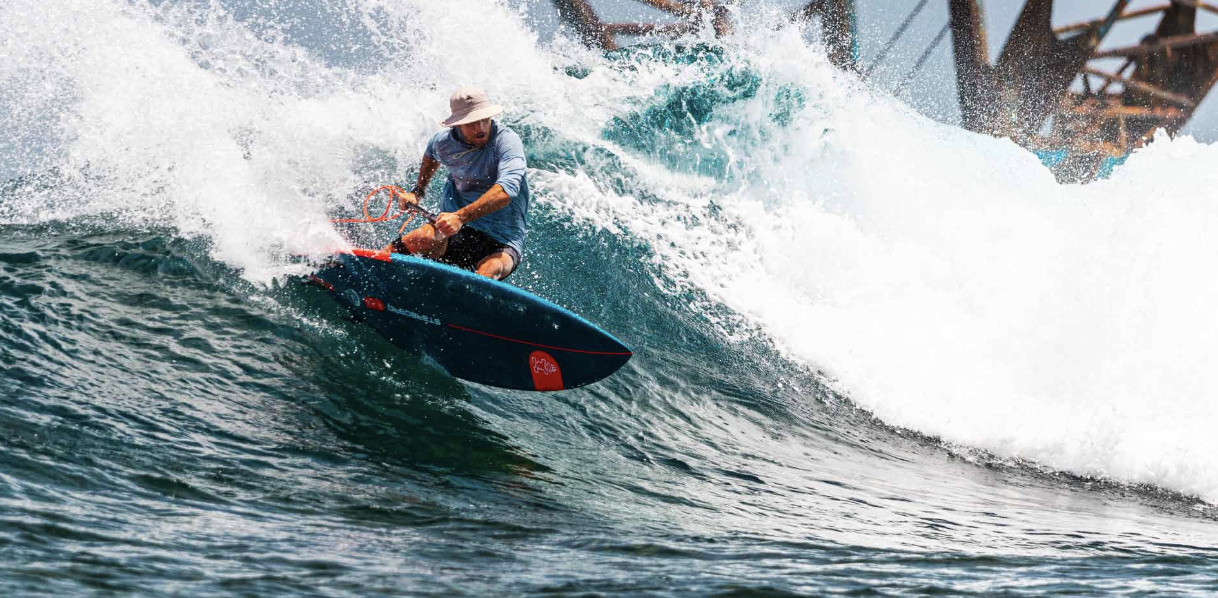
The Starboard 7'10" x 28" Pro is a performance SUP surf board designed for riders who want quicker rail transitions, stronger hold in steeper faces, and more direct response under speed.
At 104 liters and 28 inches wide, it prioritizes engagement over comfort. It rewards clean technique and exposes hesitation. In Florida beach break, that means it feels technical on weaker days and powerful when the waves have shape.
The pulled-in nose reduces swing weight and improves responsiveness. The squash tail provides a defined pivot point under load. The domed rails allow smooth engagement in short-period surf. The quad and 2+1 fin options let you tune the feel depending on conditions.
This is a progression tool for riders ready to move into a narrower, more reactive shape.
If that description aligns with where you are in your surfing, the next step is simple. Get it in the water. Feel how it responds. Then decide with clarity.
That is how you move forward without guessing.

Comments
Be the first to comment...