What Makes Epic Boardsports Different? Nicholas Reeser on Florida Foiling
- Posted on
- By Megan Timmer, Rygo Labs
- Posted in Cocoa Beach foiling, Epic Boardsports, Florida foiling, foil gear Florida, Nicholas Reeser
- 0
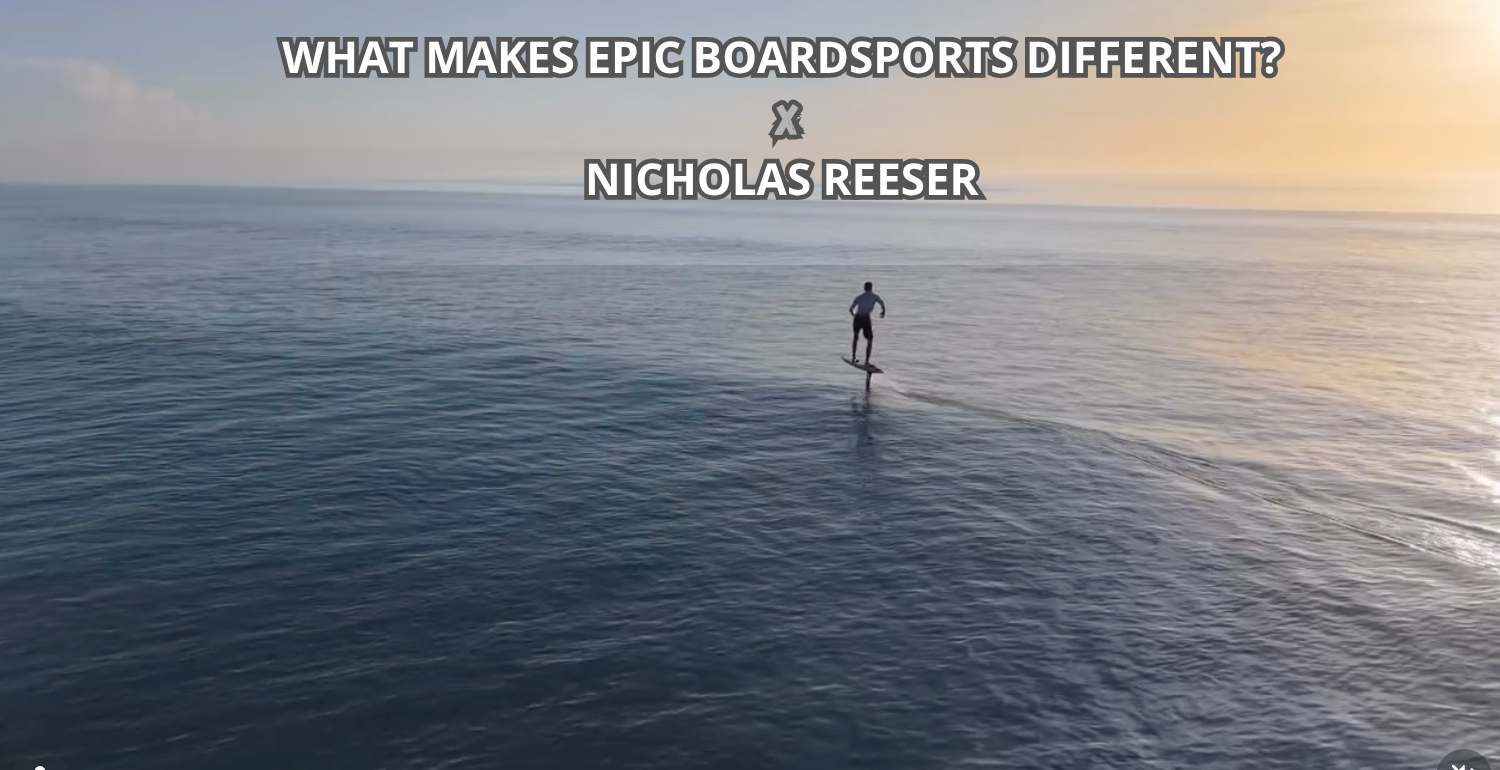
In this interview, Nicholas Reeser shares his background in sailing and foiling, what makes Florida such a special place to ride, and why Epic Boardsports stands out in Cocoa Beach. The conversation covers local knowledge, community, beginner gear mistakes, progression, and the kind of support that helps riders stay connected to the water.
What Makes Epic Boardsports Different? Nicholas Reeser on Florida Foiling, Community, and Choosing the Right Gear
I’m Megan Timmer from Rygo Labs, and I recently had the chance to sit down with Nicholas Reeser for a conversation about riding, foiling, Florida, and the kind of community that keeps people coming back to the water.
Going into it, I knew we would talk about gear and progression. What I did not expect was how naturally the conversation opened up into something bigger: local knowledge, the feeling of finding the right shop, and why that still matters in a sport where so many people are trying to figure things out on their own.
Nick brings a perspective that feels grounded from the start. He is not just someone who rides once in a while or talks about gear in theory. He speaks from lived experience, from sessions, trial and error, and real time spent figuring out what works and what does not, which gives more weight to the way he talks about progression, conditions, equipment, and the people around him. As we talked, it became clear that this was not just a conversation about what he rides. It was also about what helps riders stay connected, keep learning, and feel like they have a place in the sport.
More than anything, the conversation felt grounded. Nick talked about riding in a way that felt honest, technical when it needed to be, and connected to real life on the water. That made it easy to follow the conversation wherever it went.
Who Is Nicholas Reeser?
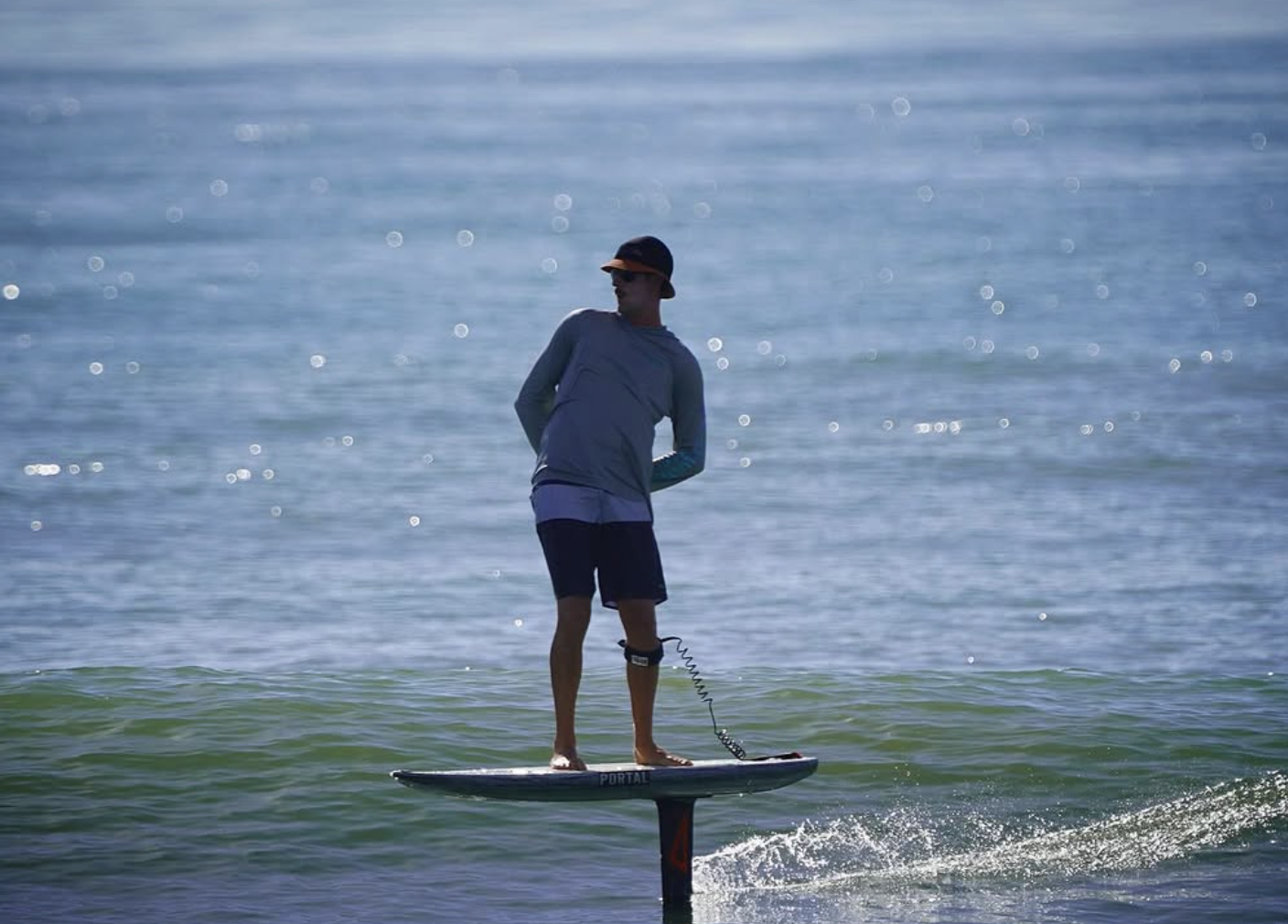
Nicholas Reeser grew up in South Florida, in Fort Lauderdale, with the water already built into daily life. Both of his parents are Olympic sailors, and a lot of his early memories started there, around boats, beach time, fishing, and being outside near the ocean. He talked about growing up with a Hobie Cat, going out with his dad while he coached sailing, and spending plenty of time at the beach with his family.
As he got older, sailing became more serious. What started as part of life turned into his sport. He sailed competitively through high school, then went on to the Coast Guard Academy, where he kept pushing at a high level and eventually won a national championship during college. Around that same time, foiling started taking up more space in his life. He had gotten into it before college, but once he graduated last May, it became a much bigger part of his routine.
Now, foiling sits at the center of how he spends his time whenever he gets the chance to be on the water. Even with the demands of Coast Guard life and a schedule that changes depending on where he is stationed, he still finds ways to stay connected to it.
What Makes Florida Such a Special Place to Ride?
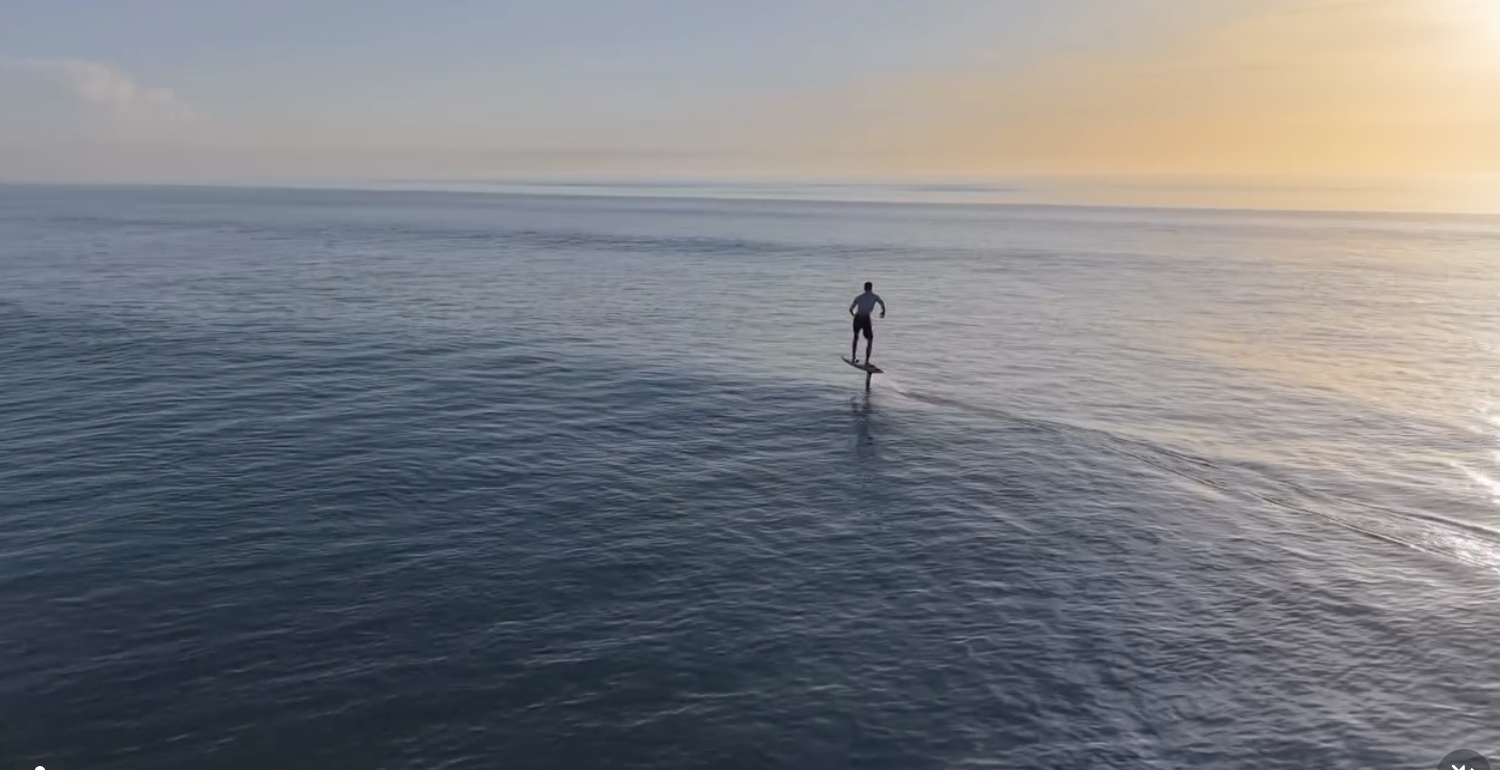
For Nick, the biggest thing about riding in Florida is the variety. He said the conditions are “almost never the same two days in a row,” and that is what keeps it interesting. Instead of waking up expecting the same session every day, he looks at the forecast and figures out what the day is offering. Sometimes that means downwind runs when the wind lines up from the north or south. Sometimes it means surf foiling or SUP foiling when it is light offshore and the waves are good. Other days it means flat water and a completely different setup.
That range is what makes Florida feel different from a lot of other places. Nick said he has “gotten to take some trips to places that are more of a destination for water sports that maybe don't have as much variety. Like you go to Hood River and like yes, it's absolutely incredible, but like it's the same thing over and over and over again.”
Florida is not always like that. What it gives riders is more variation, more chances to adapt, and more reasons to build out different disciplines instead of getting locked into one lane. As he put it, “the coolest part is just the variety.”
He also pointed out that Florida can make riders more well-rounded because there is usually something to do if you know how to read the day. Since moving to Cocoa Beach, he said he could count on one hand how many days there was really nothing to do on the water. Even then, there were still options to paddle, dock start, or find another way to stay connected to it.
That idea also lines up with how Nick talks about foiling in general. Earlier in the conversation, he said one of the biggest draws is that it unlocks conditions that might not look impressive at first. In his words, foiling gives you “a pretty high level of satisfaction out of pretty mediocre conditions,” which helps explain why it fits Florida so well. Not every day has to be perfect to be worth chasing.
For him, that variety is the draw. Florida gives him more ways to ride, more reasons to adapt, and more chances to stay on the water.
How Did Nicholas Reeser First Connect With Epic Boardsports?
Nick told me Epic Boardsports was a bit of a “dark horse” at first. Before moving to Cocoa Beach, he had already been there a few times and knew of other names in the area, but he did not really know much about Epic.
That changed when his relationship with Code started to shift and he got connected to the shop through the foil side of the sport. He rides Code foils, and when the retailer he had been working with stepped back, he was turned over to Epic. That was his first real point of contact with Jonathan and Jennifer at the shop.
The timing lined up fast. Right around graduation, Nick found out he was moving to Cocoa Beach with the Coast Guard, and once he got there, he ended up living only about a block and a half south of the shop. What started as an introduction through gear quickly became a real relationship built in person. As he put it, he has only known them for about six months, but in that time they had already been “absolutely awesome.”
What stood out to him early was that Epic did not feel passive or hands-off. He talked about Jonathan and Jennifer as people who are always moving, always taking care of people, and actively building something. He also mentioned how much they had going on inside the shop itself, from the recent remodel to the amount of inventory they were bringing in. From his perspective, it felt like a business with its own setup, its own mindset, and people behind it who were fully involved.
Why Do Local Riders Trust Epic Boardsports in Cocoa Beach?
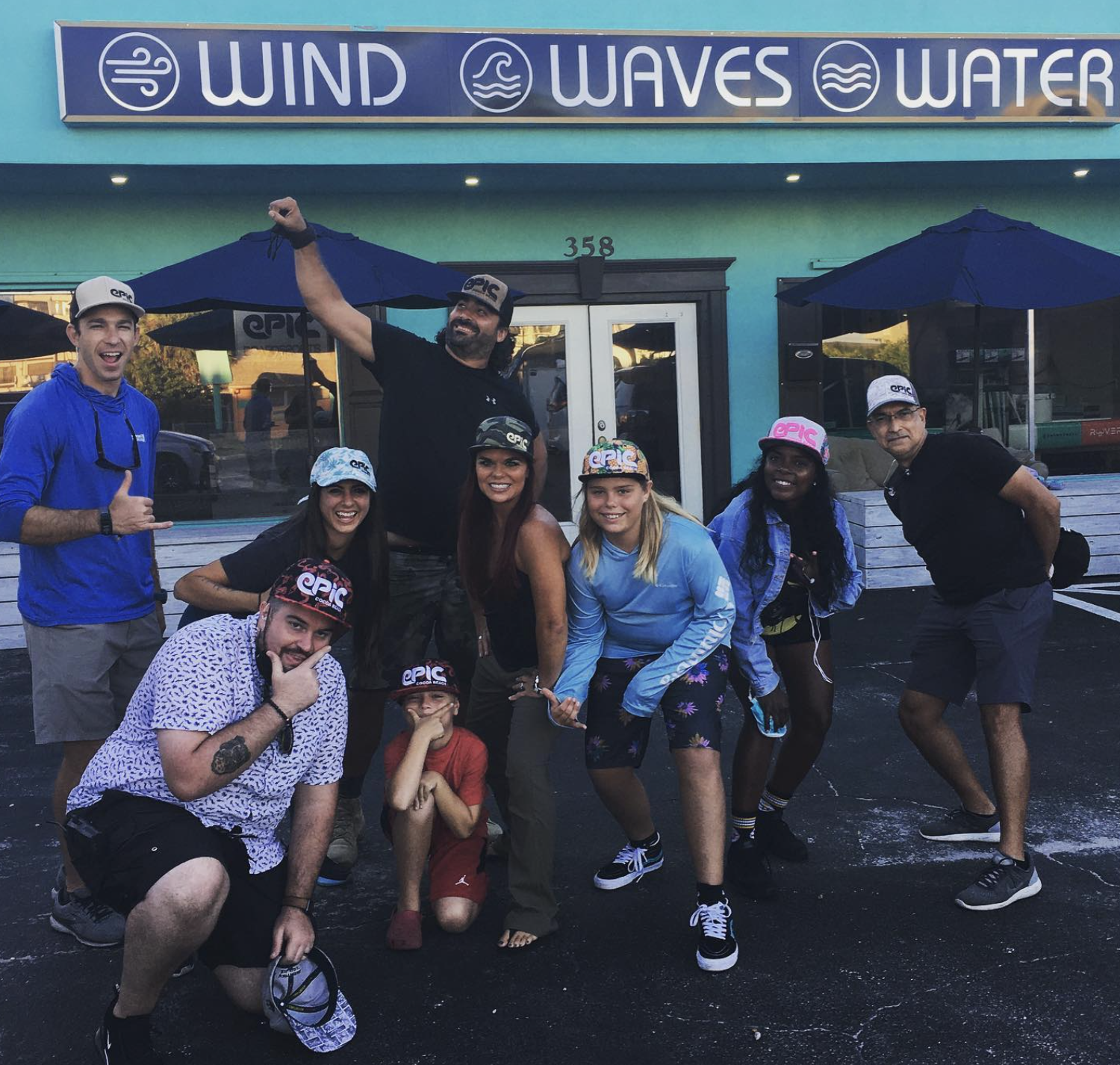
One of the clearest things Nick said about Epic had nothing to do with specs, pricing, or product categories. It was the way he described the shop as part of daily life. He told me he drives by it every day on his way to work, and a lot of the time he will spot someone he knows already there. In his words, “the community just kind of stops in there all the time.”
Nick made it sound less like a store people visit only when they need something and more like a place riders naturally drift into. He said he will see Jonathan and Jennifer there, then notice a friend’s car in the parking lot too, and suddenly a quick stop turns into 30 or 45 minutes without even meaning to. That is a very different kind of relationship than just walking in, buying a piece of gear, and leaving.
Nick described Jonathan and Jenifer as welcoming, involved, and always taking care of people. From the way he talked about them, Epic feels social because it is actually built around real relationships. People stop in because they know they will see someone, catch up, ask a question, or stay longer than they planned.
That kind of environment matters in a sport like this. For a lot of riders, progression does not only happen on the water. It also happens through conversations in parking lots, quick gear questions, hearing what worked for someone else that morning, or just being around other people who are just as into it as you are. It is a shop, but it is also a place people want to be.
What Makes Epic Boardsports Different From Other Water Sports Shops?
One of the biggest things Nick pointed to was who you are actually dealing with when you walk into Epic. He said that when someone calls the shop, there is a good chance they are talking directly to Jonathan or Jennifer, not someone disconnected from the sport or reading from a script.
In a category like foiling, winging, and paddling, people usually do not need a generic answer. They need someone who understands the gear, the local conditions, and what actually makes sense for the way they want to ride.
Nick also talked about how much local knowledge matters. Jonathan and Jennifer have lived in the area for years, and that changes the kind of help they can give. They are not just selling products. They know the spots, the weather patterns, the common mistakes, and the kind of setup that works better in this part of Florida. That gives riders something they cannot get from a random online listing or a broad customer service line.
He also made a point that stood out about inventory and support. Epic is not just listing products online and hoping everything works out after the sale. They actually stock gear, carry demo equipment, and help solve problems when something goes wrong. Nick described how Jonathan will dig through parts, fix issues on the spot, or pull from the demo fleet if needed so people can stay on the water. That kind of support says a lot about how the shop operates.
Epic stands apart because the support does not stop at the sale. Riders can get answers, solve problems, and keep moving without starting from scratch every time something changes.
What Does Epic Boardsports Do Well When Helping New Riders Get Started?
One of the best points Nick made was that good shops do not just try to sell people something as fast as possible. He said, “sometimes it’s the sales you don’t make that are the most important ones,” and that really gets at what he sees Epic doing well.
A beginner does not just need gear. They need someone to slow the process down, ask the right questions, and help them avoid buying the wrong setup too early.
Nick talked about how easy it is for people to walk in with the wrong idea of what they need. Sometimes they want the gear an advanced rider is using. Sometimes they are focused on what looks the coolest or what they saw online. But that does not always line up with what will actually help them learn. From his perspective, Epic does a good job meeting people where they are instead of just pushing them toward a sale.
That kind of help matters even more in foiling and related sports because the learning curve can get expensive fast. The wrong board, the wrong foil, or the wrong setup can make progression way harder than it needs to be. Nick’s point was simple: a good shop helps people get into the right gear for their actual level, their actual goals, and the kind of riding they are really going to do. That kind of guidance can save beginners time, money, and a lot of frustration.
What Gear Is Nicholas Reeser Riding Right Now and Why Does It Work for Him?
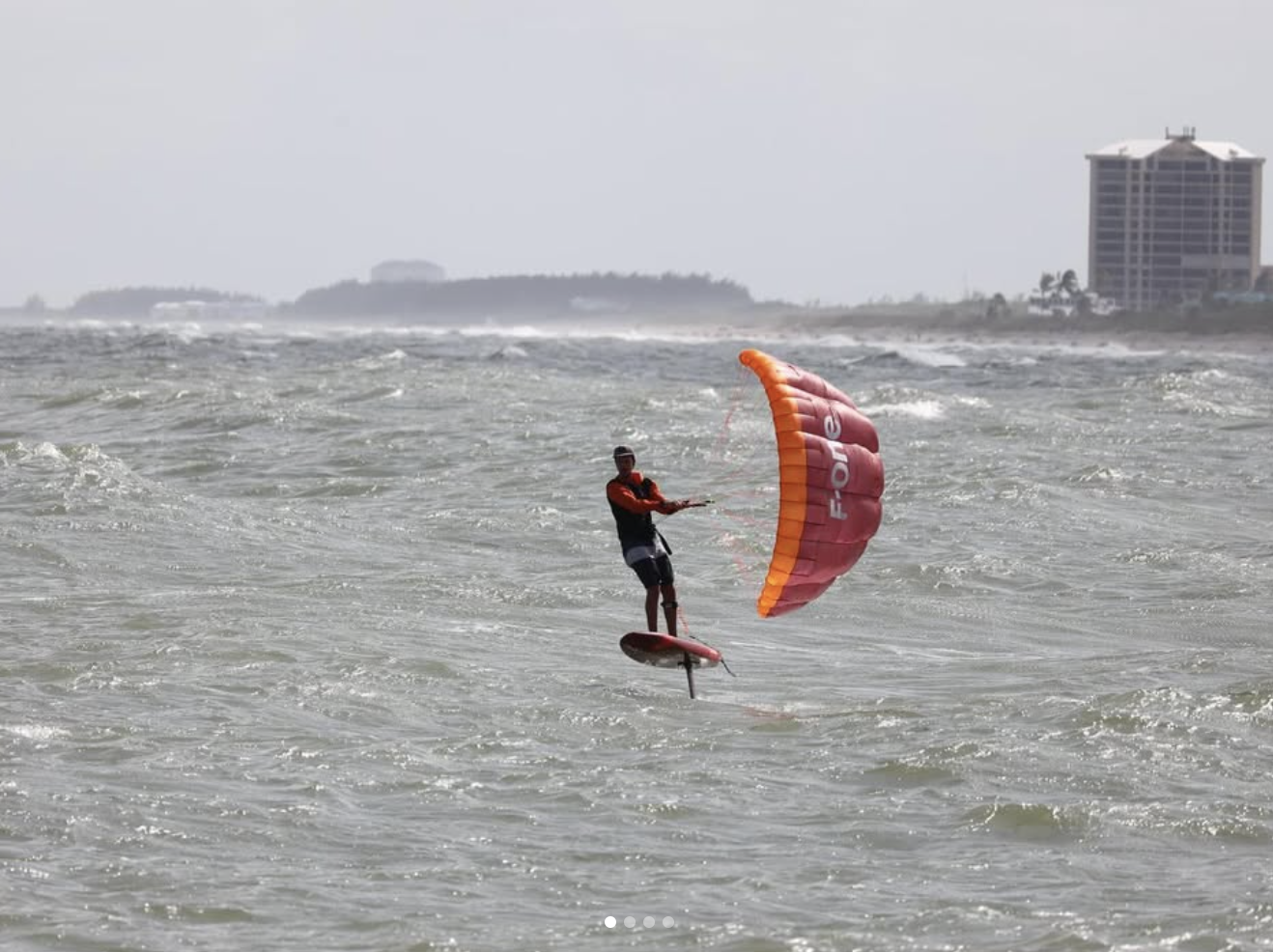
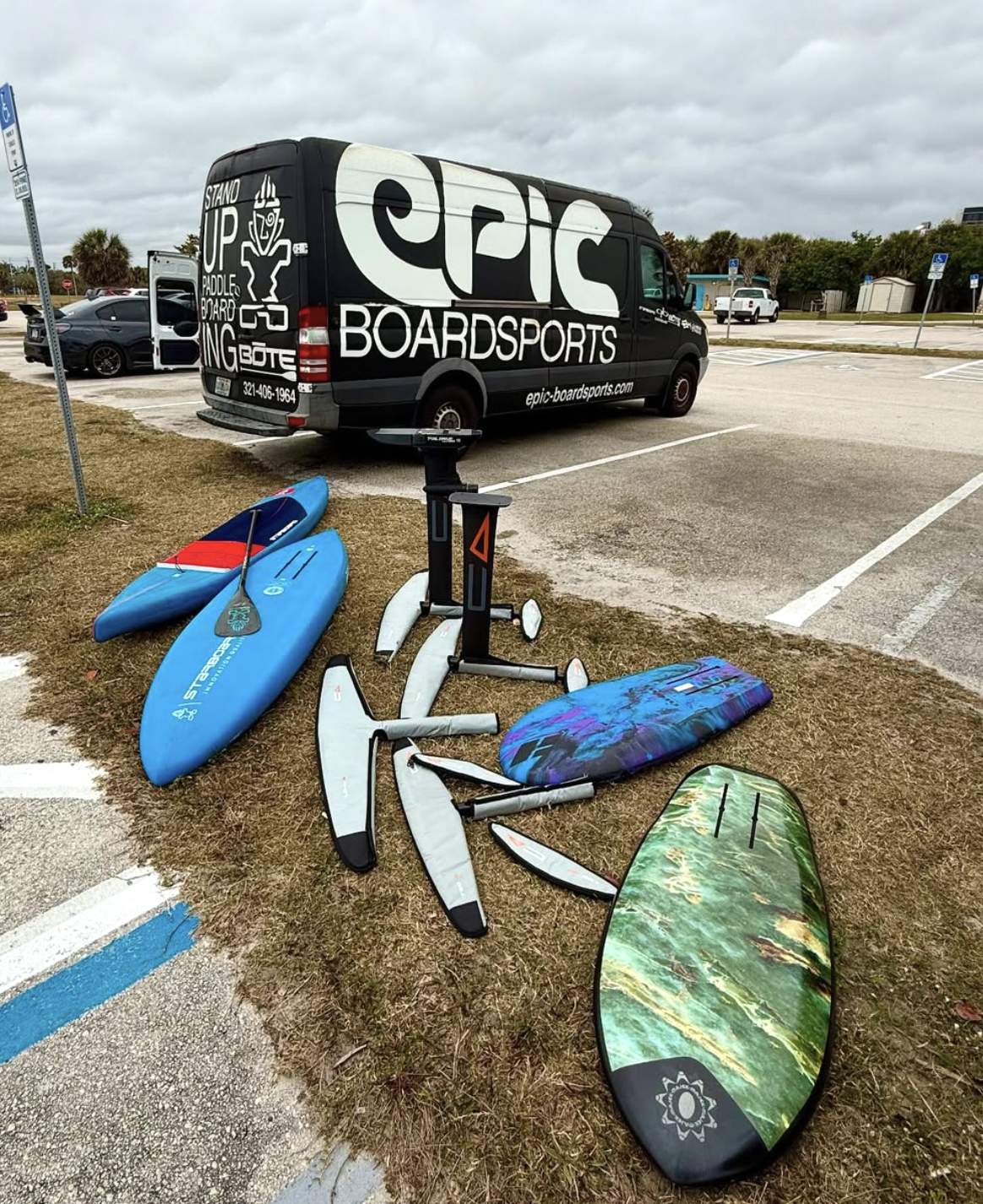
Right now, Nick said his go-to foil setup is the biggest Code X, the 985, paired with the medium fuse, 150 tail, and an 80 cm plus mast. That is the setup he keeps coming back to the most. Board-wise, he said he is “all over the place,” but he also called out the Starboard Above 73L as a board he has been riding a lot for parawing, and said that has been “a lot of fun.”
He did not talk about gear like there was one magic answer. He talked about figuring out what each piece of equipment actually does well. He said one of the fun parts of riding new gear is getting to learn what it “does and doesn’t work for in our area.” That fits the way he approaches riding in general. Florida gives him a mix of conditions, so the right setup is not just about what works in perfect water. It is about what helps him get the most out of the kind of sessions he actually has in front of him.
He also talked about how much access to gear matters. Nick said one of the cooler parts about working with Epic is that Jonathan is committed to keeping a real demo fleet, even though it is expensive for the shop. That has given him the chance to try different equipment, share honest feedback, and help sort out what might work best for different riders. So when Nick talks about what he is riding, it is tied to actual time on the water, actual testing, and actual comparison between setups.
He clearly has a setup he trusts, but he is still testing, comparing, and paying attention to how small gear changes show up on the water.
What Gear Mistakes Do Newer Riders Make When They Try to Buy on Their Own?
Nick kept coming back to one simple point: a lot of newer riders end up chasing the wrong gear because they are looking at what advanced riders use instead of what will actually help them learn. He said it is easy for people to see a certain setup online, or watch someone ripping on a smaller board or foil, and assume that is where they should start. In reality, that can make progression harder, slower, and more frustrating.
He also pointed out that even when two riders look similar on paper, the right answer is not always the same. Weight matters. Conditions matter. Experience matters. The kind of riding someone wants to do matters too. That is why newer riders can make expensive mistakes when they try to choose gear without enough guidance. Without context, people tend to focus on what sounds high-performance instead of what is actually useful for their level.
Nick was not acting like there is one perfect setup for everyone. Good gear choices usually come from honest matching, not hype. For newer riders, that often means staying more realistic than they want to at first. In the long run, that usually leads to better sessions and faster progression.
What Kind of Setup Helps Newer Riders Progress Faster?
Nick talked about how much setup can shape the learning curve, especially early on. One thing he pointed to was how board design has shifted. He said a lot of people used to think shorter and wider automatically meant easier, but now there is more understanding that longer, narrower boards can actually help in a lot of situations. They carry speed differently, track better, and can make takeoff smoother.
He also mentioned that the foil changes the equation. Once a foil is underneath the board, it adds stability in its own way, so the board does not always need to follow the same logic people expect from older surf-style thinking.
His point was not that there is one perfect beginner board or one perfect foil. It was that the right setup should make things easier, not harder. For newer riders, faster progression usually comes from equipment that gives them a fair shot to learn the basics well, build confidence, and stay on the water longer.
How Does Epic Boardsports Support the Local Water Sports Community?
From the way Nick described it, Epic is helping give the local scene a place to gather. He talked about the shop hosting a watch party and opening the space up in a way that brought people together. He also mentioned a downwind clinic that had a strong turnout, which says a lot about the kind of role the shop is starting to play beyond just selling gear.
He made it clear that Epic is becoming a real meeting point for riders. People stop in, catch up, ask questions, and stay connected to what is happening locally. That kind of space matters because a strong scene does not just build itself. It usually needs a place, a few committed people, and a shop willing to actually put energy into the community.
Nick was not just talking about Epic as a business. He was talking about it as part of the local water sports ecosystem. Between the events, the people, and the way riders naturally filter through the shop, Epic seems to be helping create more connection around the sport in Cocoa Beach.
What Would Nicholas Reeser Tell Someone Who Feels Intimidated to Get Started?
Nick’s advice was simple: start with a lesson. From his perspective, that is one of the best ways to get a feel for the sport without guessing your way into it. A lesson gives people a chance to ask questions, try gear, and start building a better sense of what kind of setup actually fits them before they spend money in the wrong place.
He also made the point that getting into these sports can look more intimidating from the outside than it really is. There is a lot of gear, a lot of opinions, and a lot to learn at first, but that does not mean people need to have it all figured out on day one. The better move is to get around the right people, spend some time on the gear, and build from there.
Lessons and local shop guidance shorten the learning curve, give people better direction, and make the whole thing feel more approachable. Nick did not make it sound like riders need to rush into the deep end. He made it sound like they just need a real starting point.
FAQ About Epic Boardsports and Nicholas Reeser
▼Who is Nicholas Reeser?
Nicholas Reeser is a Florida rider with a strong background in sailing and foiling. He grew up in South Florida, comes from a sailing family, competed at a high level, and now spends as much time on the water as possible around his Coast Guard schedule.
▼How did Nicholas Reeser get into foiling?
Foiling became a natural extension of his life on the water. After growing up around sailing and spending years building that skill set, he got into foiling before college and kept pushing deeper into it over time.
▼Why should beginners take a lesson before buying foil gear?
A lesson gives beginners a chance to try gear, ask questions, and learn in the right conditions before making expensive setup decisions. It is one of the easiest ways to avoid buying the wrong equipment too early.
▼How did Nicholas Reeser first connect with Epic Boardsports?
Nick first got connected to Epic through the foil side of the sport, then built a stronger relationship with the shop after moving to Cocoa Beach and becoming part of the local scene.
▼What makes Epic Boardsports different from other water sports shops?
Epic stands out because it feels local, involved, and rider-driven. People can get honest advice, ask real questions, and stay connected to the sport through a shop that is active in the community.
▼What gear is Nicholas Reeser riding right now?
Nick said he has been riding the Code X 985 with a medium fuse, 150 tail, and an 80 cm plus mast. He also mentioned riding the Starboard Above 73L a lot for parawing.
▼What gear mistakes do newer riders make most often?
A common mistake is trying to buy gear based on what advanced riders use instead of what actually fits a beginner’s level, conditions, and goals. That can make progression harder and more expensive than it needs to be.
▼What is the best way for a beginner to get started?
Nick’s advice was to start with a lesson. That gives people a chance to ask questions, try gear, and build a connection with experienced riders and a local shop before making big gear decisions.
Final Summary
Talking with Nicholas Reeser made the value of Epic Boardsports easy to understand. The shop is not just a place to buy gear. It is a place where riders get honest guidance, stay connected to the local scene, and keep learning as they progress. Nick’s background, his approach to riding, and his experience with Epic all pointed to the same thing: the right shop can make a real difference, especially when you are trying to get started or make smarter gear decisions in Florida.

Comments
Be the first to comment...