Is Stand-Up Paddle Boarding Easy in Cocoa Beach?
- Posted on
- By Franco Omega Tremsal & Rygo Labs
- Posted in Cocoa Beach Aquatic Center paddleboarding, family paddle boarding Cocoa Beach, paddle boarding Cocoa Beach beginners, Ramp Road Park paddleboarding, SUP Cocoa Beach, SUP eco tours Cocoa Beach, SUP lessons Cocoa Beach
- 0
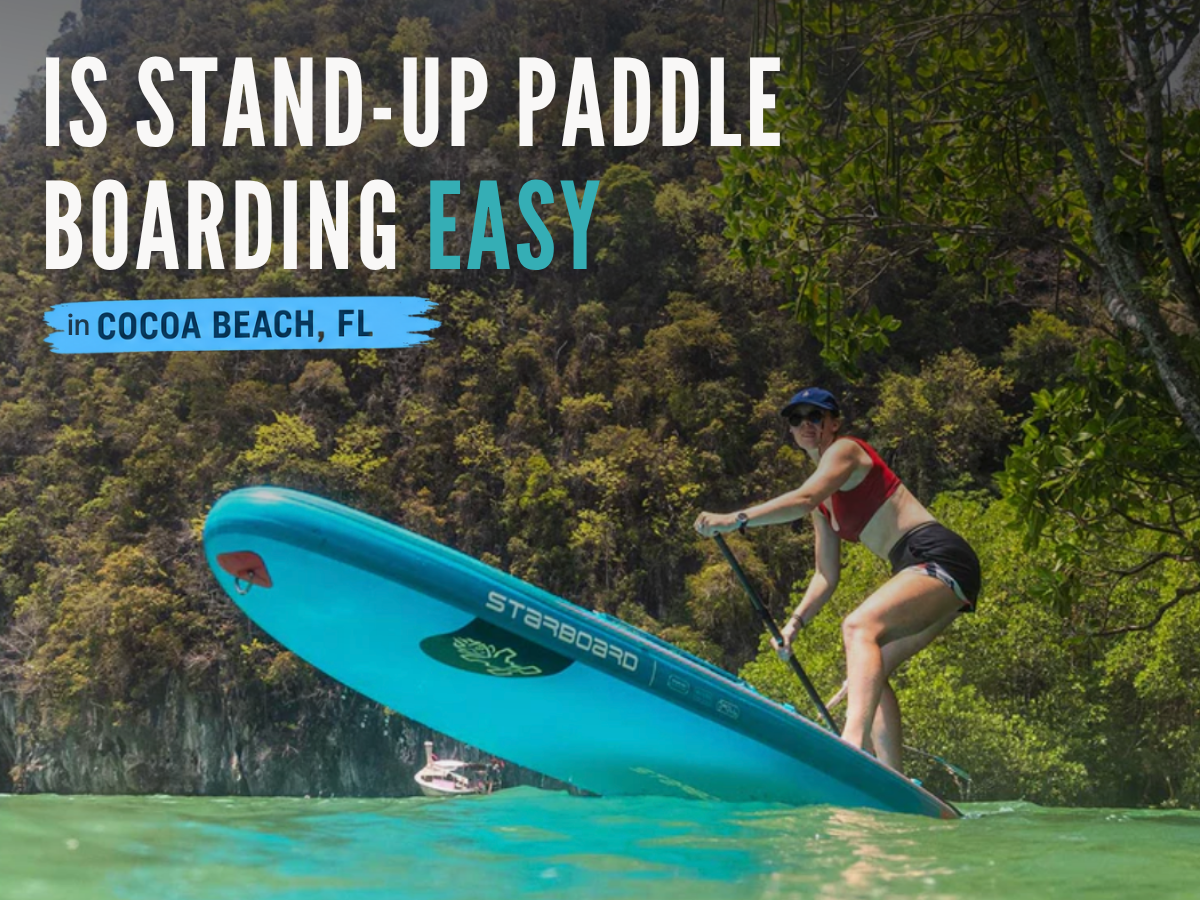
Wondering if stand-up paddle boarding is easy in Cocoa Beach? This guide breaks down why SUP is beginner-friendly when you have the right conditions, the right board, and the right local launch spot. Learn where first-timers should paddle, why lagoon water is easier than the ocean, what equipment actually matters, and whether you should book a SUP lesson, rental, or eco-tour. Epic Boardsports also shares beginner tips, family advice, local launch recommendations like Ramp Road Park and Cocoa Beach Aquatic Center, and answers to the most common first-time paddle boarding questions.
If you've been wondering whether you can actually pull off stand-up paddle boarding on your Cocoa Beach trip, or you've watched friends glide across the Banana River and thought "I'd just fall in", take a breath.
The short answer is yes, SUP is easy in Cocoa Beach, especially when two things are working in your favor: the conditions and the equipment.
You don't need to be a surfer, an athlete, or someone with perfect balance to enjoy stand-up paddle boarding here. With calm water, a stable board, and a paddle that fits you, most first-timers can get comfortable within their first 10 minutes on the water. Cocoa Beach is also a great place to learn because you have access to protected local waterways within minutes of our shop, so even when the beach side feels windy or choppy, there's almost always a calmer launch option nearby.
Whether you're staying in Cocoa Beach, visiting nearby Cape Canaveral or Merritt Island, or driving over from Orlando for the day, the lagoon side gives beginners a much easier first SUP experience than open surf.
In this guide, you'll learn:
✔ Why Cocoa Beach is one of Florida's most beginner-friendly SUP destinations
✔ How conditions and equipment shape your first paddle
✔ Where to launch, including Ramp Road Park and Cocoa Beach Aquatic Center
✔ Seven first-timer technique tips that genuinely make a difference
✔ Whether age, family, or visiting from Orlando changes anything
✔ How much practice you really need before a coastal or cave tour
✔ Whether to take a SUP lesson or rent on your own
✔ Answers to the most common first-timer questions we hear at the shop
★★★★★
"If you are a first-time paddle boarder, Epic is the place. Best experience for a rookie. Jennifer is patience personified."
— Katherine G., Google review
At Epic Boardsports, we help beginners figure out where to go, what gear to use, and whether a SUP lesson, paddleboard rental, or guided eco-tour makes the most sense for the day.
Is stand-up paddle boarding easy for beginners?
Yes. Stand-up paddle boarding is one of the easiest watersports to pick up, especially when you start on calm water. The first few minutes may feel wobbly — that's normal. Most beginners start on their knees, paddle around a little, then stand up once they feel steady. A wide, stable board makes the whole process much easier than it looks from shore.
The goal of your first session isn't to paddle perfectly. The goal is to get comfortable, have fun, and learn how the board moves under your feet.
A few things make SUP easier for first-timers:
✔ A stable, beginner-friendly board sized to you
✔ A light, adjustable paddle
✔ Calm water instead of surf
✔ A short route instead of a long paddle
✔ Basic local guidance before launching
If you can walk, you can stand-up paddle board in Cocoa Beach. The key is starting in a place that matches your experience level — which we'll get to in a minute.
⤷ If you want a deeper breakdown of the learning curve, read our guide on how long it takes to learn paddle boarding in Cocoa Beach.
What makes paddle boarding easier in Cocoa Beach?
The two biggest factors are conditions and equipment.
Conditions decide how much fun you'll have as a beginner. A super windy day usually isn't the best time to start, especially if you're brand new. Wind can push the board around, make paddling harder, and turn a relaxed session into a workout you didn't sign up for.
Here's the good news: Cocoa Beach has protected local launches within about a five-minute drive of our shop. Depending on the wind direction and strength, there's almost always a sheltered place to paddle nearby. We check the forecast every morning and can point you to the right launch for the day, that's part of why people stop into the shop instead of grabbing a board off a beach kiosk.
Equipment matters just as much. The right board and paddle can make SUP feel approachable. The wrong setup can make it feel harder than it needs to be. Our quiver covers different sizes, shapes, and experience levels, so you're not stuck trying to learn on a board that feels unstable.
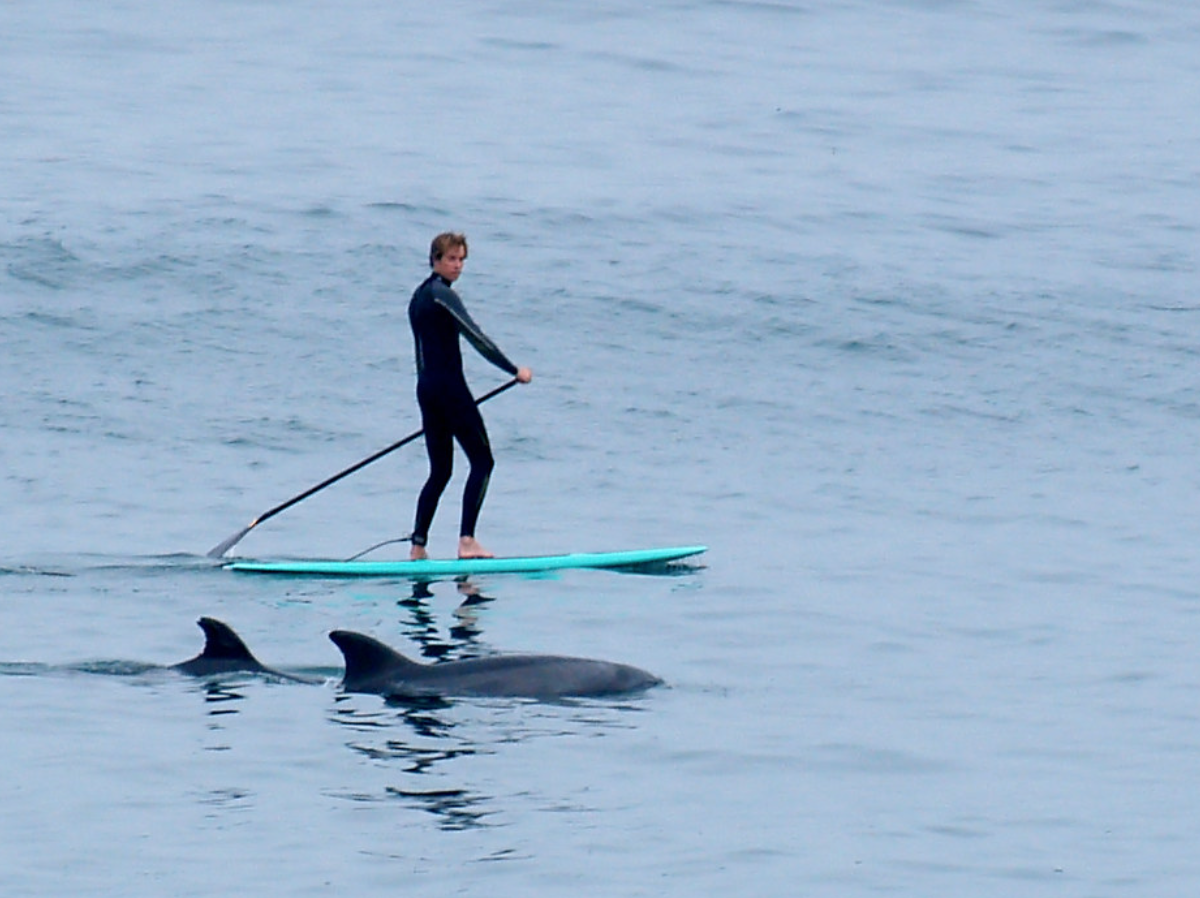
This is also where Cocoa Beach gets fun. Calm lagoon launches give beginners a better chance of seeing dolphins, manatees, fish, and coastal birds while they learn. Wildlife sightings are never guaranteed, but quiet paddling in protected water gives you a much better shot than fighting chop on the ocean side.
Pro tip: Morning sessions before 10 a.m. tend to be the calmest in Cocoa Beach almost year-round. If you are nervous about balance or want photo-worthy water, that is the window to aim for.
Why does the right paddle board equipment matter?
Equipment matters way more than most beginners realize. The wrong board or paddle can make a first-timer feel like they're fighting the water. The right gear makes it feel like cheating.
Beginner paddle boards are usually wider and more stable than performance boards. That extra stability helps you stand, balance, turn, and relax. As a new paddler, you don't need the fastest board, you need the board that gives you confidence.
Paddles matter too. A light, strong, adjustable paddle helps beginners avoid getting tired too quickly. If the paddle is too heavy or set to the wrong height, your arms and shoulders end up working harder than they should. Heavy, flexy paddles are the #1 reason new paddlers get sore shoulders and call it a day early.
A few things we don't compromise on at Epic:
1. Boards sized to you: from kids to taller, heavier riders who need extra volume for stability
2. Light, strong, two-piece paddles, adjustable to your height
3. Working gear that our team rides and inspects ourselves: no mystery flex, no waterlogged foam, no random sizing
⤷ If you're renting, ask for help choosing the right setup. Our SUP rentals and demos are a good option if you want the right board and paddle for your size, skill level, and conditions.
Is paddle boarding easier in the ocean or the lagoon?
For most beginners, the lagoon is easier than the ocean.
The ocean side of Cocoa Beach can be fun, but it's more dynamic. You may deal with waves, shorebreak, current, and wind. That's exciting once you have experience, but it's usually not the easiest place to learn.
The lagoon side is generally calmer and more predictable. That gives beginners more time to focus on the basics: standing up, paddling straight, turning, and getting comfortable on the board.
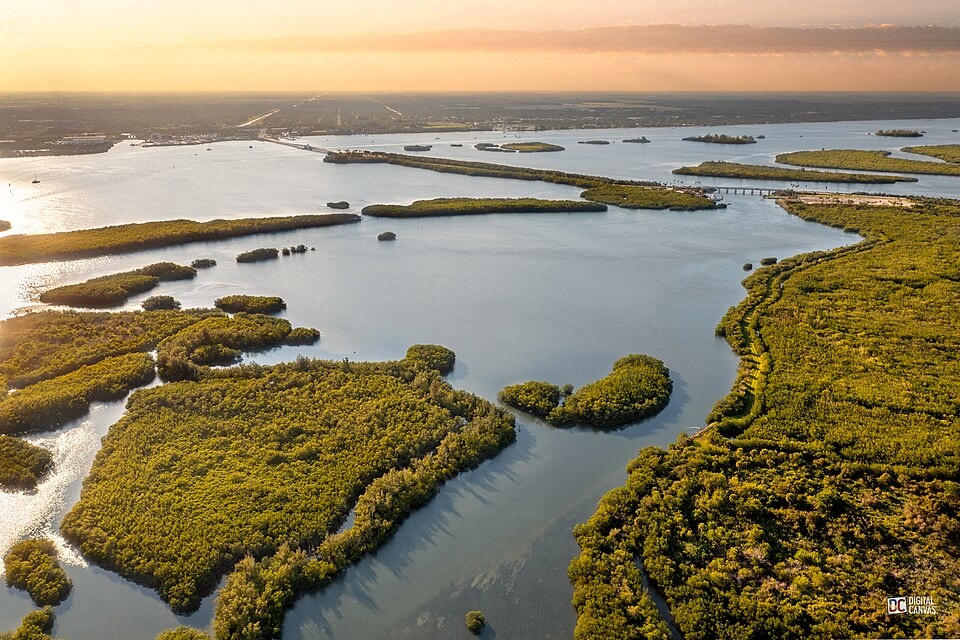
The Banana River and Indian River Lagoon areas are especially helpful because they offer access to protected water, regular wildlife sightings (dolphins, manatees, rays), and calmer paddling routes that don't punish a wobbly first hour.
If it's your first time, the rule is simple: calm water first, ocean later.
Where should beginners paddle near Cocoa Beach?
Beginners should look for protected, calm launch spots instead of heading straight into open water. Two local options we recommend often are Ramp Road Park and the Cocoa Beach Aquatic Center.
Ramp Road Park
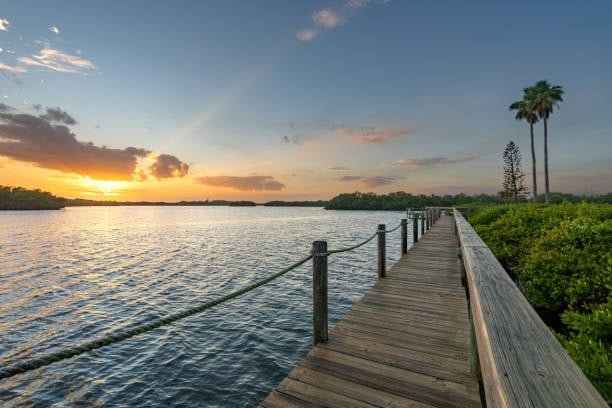
Ramp Road Park is one of the most popular beginner-friendly launch areas because it offers good protection from wind. Depending on the direction, you can almost always find a sheltered place to paddle. The water is shallow and calm, parking is easy, and it's one of the friendliest first-time launches anywhere on the Space Coast.
Cocoa Beach Aquatic Center
The Cocoa Beach Aquatic Center is another strong option. It has generous open parking, and in some spots you can launch from a floating dock — a nice perk if you'd rather not balance on a sandy shore while getting your board in.
One thing to keep in mind: a strong east wind can make this launch tougher. It's still worth checking conditions before you head over.
Ask before you launch
Conditions change daily in Cocoa Beach. A spot that's easy one morning can feel harder the next afternoon if the wind shifts. That's why local guidance helps — when you stop into Epic for a rental, lesson, or gear question, we'll help you choose a launch based on wind direction, experience level, and the kind of paddle you want to have.
Other launches we sometimes point beginners to, depending on the day:
- Kelly Park East (Merritt Island): protected coves with regular dolphin and manatee sightings
- Thousand Islands (Cocoa Beach): winding mangrove tunnels and glassy water on most days
- Lori Wilson Park area lagoons: convenient if you're already in town for the day
If conditions are off at one spot, there's almost always another within a 5–10 minute drive that's protected. You're not stuck guessing.
⤷ Read Also: The best places to paddle board on Florida's East Coast.
First-time paddler tips that actually matter
The internet has thousands of SUP "how to" videos, and most of them overcomplicate things. Here's the short list of what genuinely makes a difference on your first time on the water in Cocoa Beach, written from someone who coaches this exact moment several times a week.
- Look at the horizon, not at your feet.
This is the single biggest fix for "I keep losing my balance." Your body balances based on where your eyes are aimed. Stare at your toes and you'll wobble; pick a point on the shoreline or out on the water and you'll feel locked in almost immediately.
- Stand in the middle of the board, feet parallel.
Hip-width apart, toes pointing forward, weight centered between the two edges. Most boards have a carry handle in the middle — line your feet up on either side of it and you're in the right spot.
- Soft knees, tall posture.
Don't lock your knees — keep them slightly bent so they can absorb tiny ripples. At the same time, stand tall through your hips and chest. Hunched-over paddlers fall in more often than relaxed ones.
- Hold the paddle the "wrong" way (it's actually right).
The angled blade should tilt forward, away from you — not toward you. This trips up almost every first-timer. If you feel like the paddle "looks backward," you've probably got it correct. One hand on top of the T-grip, the other on the shaft around chest height.
- Paddle from your core, not your arms.
Reach forward, plant the blade in front of you, and pull water back toward your feet by rotating your torso. Your arms are mostly along for the ride. This is why people are surprised SUP works their abs — it's all core.
- Start kneeling. Always.
Get the board moving on your knees first, find your balance point, then stand one foot at a time. Skipping the kneeling start is the #1 reason beginners fall in the first 30 seconds.
- Fall away from the board.
You probably won't fall — but if you do, push yourself sideways into the water rather than backward onto the board. The board is buoyant and the leash will keep it within reach. Getting back on is simple: swim to the middle, grab the center handle, kick your legs to the surface, and slide your chest onto the board. From there, get to your knees, then stand back up.
Pro Tip: Wear your leash and your PFD every single time. The leash isn't just a safety thing. It's a convenience thing. A board pushed by a 5-knot wind moves faster than most people can swim.
Is SUP easy and safe for families visiting Cocoa Beach?
SUP can be easy and safe for families visiting Cocoa Beach, especially when the session is planned around calm water, stable boards, and a short route.
For parents, the biggest question is usually not "Can we paddle?" It's "Will this be safe and fun for everyone?" In Cocoa Beach, the answer is often yes when you choose protected waterways and the right equipment.
Families don't always need every child on their own board. Sometimes the better setup is tandem paddling, where a child rides with an adult. That keeps the session more relaxed and helps younger kids enjoy the water without feeling overwhelmed.
For visiting families, the best first SUP session is usually simple: start early, stay on the lagoon side, keep the route short, and choose boards that feel stable. The goal isn't to cover a lot of distance. The goal is to help everyone feel comfortable and have fun.
If your family wants local guidance, a stand-up paddle eco-tour can be a strong choice because the route, pacing, and beginner support are built into the experience.
Is paddle boarding hard to learn as an older or first-time adult?
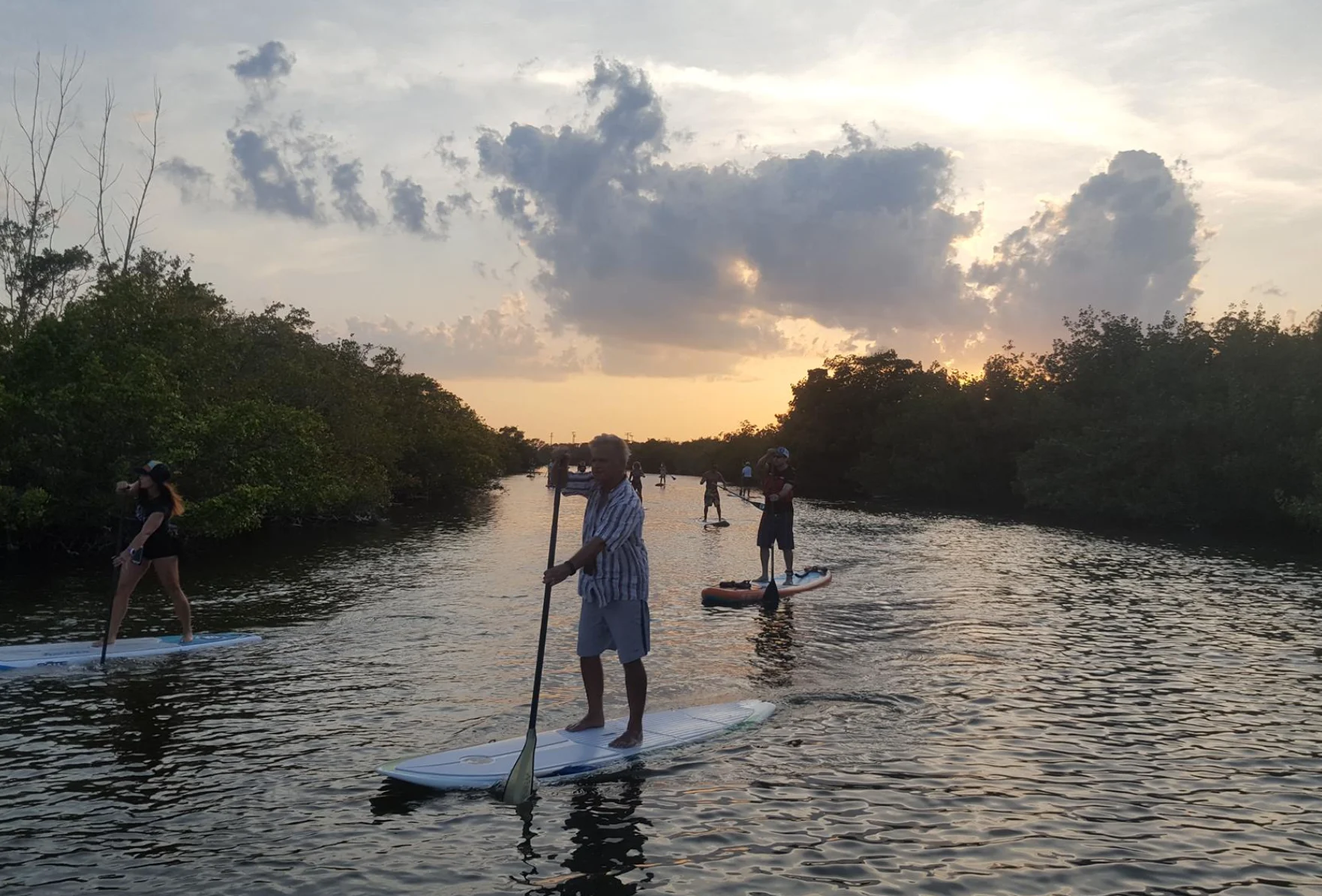
Short answer from someone who teaches first-timers nearly every day: no. We've worked with riders well into their 70s, plus plenty of mid-40s "I haven't really done a sport since college" beginners. The learning curve for casual flat-water SUP in Cocoa Beach is shockingly short, especially compared to surfing, which is in a completely different difficulty bracket.
A few honest truths about adult-beginner SUP:
• You don't have to be athletic. You need to be able to walk, carry about 20 pounds for a short distance, and stand up from a kneeling position. That's the whole list. Raw strength matters less than people assume — a properly sized board does most of the heavy lifting.
• Wide, stable boards change everything. A 32-inch-plus board on flat water feels closer to standing on a dock than balancing on a surfboard. If you've tried SUP somewhere else and felt "tippy," it was probably the wrong board, not the wrong sport. Our rental and lesson quiver is built around stability for exactly this reason.
• Start on your knees. Always. Even seasoned paddlers launch on their knees, get the board moving, and stand once they've found their center. There's zero shame in staying on your knees for the first 10 minutes — or the first 10 sessions, if that's what feels good.
• Momentum makes everything easier. A moving board is a stable board. The hardest moment is right after you stand and before you start paddling. As soon as you take a few strong strokes, the wobble disappears almost instantly. Most "I can't balance" stories come from people standing still, not from people paddling.
• Falling in is fine. Our beginner launches are knee- to chest-deep, sandy or grassy bottom, and warm most of the year. Going in once or twice is part of the experience, not a sign you're doing it wrong.
Pro Tip: If you're nervous about your first stand-up, practice the motion at home. Start on hands and knees on the floor, bring one foot up flat, then the other, and rise slowly while keeping your weight centered. Doing that a few times before your session means your body already knows the movement when you're floating.
Most adult beginners we work with are standing within their first 10 minutes, paddling comfortably within 30, and looking like naturals by the end of an hour. Age is rarely the limiting factor, the right board, the right launch, and a little patience are what actually decide your first session.
Is SUP still easy on a windy or breezy Cocoa Beach day?
It can be, but wind direction and launch choice matter.
A little wind may be manageable if you choose a protected launch. A lot of wind can make paddling frustrating and less safe, especially if it pushes you away from where you started.
In Cocoa Beach, some launch areas can still feel manageable when other spots are too exposed. Ramp Road Park, for example, is often useful because you can usually find shelter depending on what the wind is doing. The Cocoa Beach Aquatic Center can also work, although a strong east wind may make that launch more challenging.
For beginners, the safest approach is to ask before you go. If the wind is too strong, it may be better to shift your time, choose a more protected spot, or wait for calmer conditions. If the wind is light enough and the launch is protected, you may still have a great first session.
The goal isn't just to "get on the water." The goal is to have fun and stay in control.
⤷ For more detail on wind, tide, and launch planning, read our guide to the best tides and weather conditions for paddleboarding in Cocoa Beach.
Should I take a SUP lesson or just rent a paddle board?
Most people can rent a paddle board and get started, but a lesson helps you learn faster and feel more confident.
A rental is a good fit if you're comfortable on the water, want flexibility, and are happy to paddle at your own pace. We're happy to rent gear to beginners and can give you a quick briefing with safety tips and basic paddling advice before you head out.
A lesson is better if you're nervous, brand new, bringing kids, or want someone watching your technique. In a SUP lesson, you'll learn how to stand, paddle efficiently, turn, stop, and avoid common beginner mistakes: all in protected water, with all gear included.
Think of it this way:
✔ Rent if you want freedom and already feel comfortable trying it
✔ Book a lesson if you want coaching, confidence, and faster progress
✔ Choose an eco-tour if you want a guided experience with local scenery and wildlife
⤷ For a fuller comparison, see our guide on whether to book a paddle board lesson or rent in Cocoa Beach.
FAQ About Learning Paddle Boarding in Cocoa Beach
▼Is stand-up paddle boarding easy if I have bad balance?
Yes. You don't need perfect balance to paddle board. A wide beginner board, calm water, and a relaxed stance make SUP much easier than it looks. Looking at the horizon, not your feet, does most of the work.
▼Do I need to be athletic to paddle board?
No. Basic comfort walking, standing, and moving is enough for a beginner session. Technique, equipment, and conditions matter more than athletic ability.
▼Am I too old to learn paddle boarding?
Almost certainly not. We regularly teach first-timers in their 50s, 60s, and even 70s. Flat-water SUP is more about a stable board and a calm launch than raw fitness. If you can walk and stand up from kneeling, you can paddle board.
▼Will I fall in while paddle boarding?
Maybe, and that's completely normal. Falling in is part of learning, especially when you're first getting used to standing, turning, or shifting weight. The water at our beginner launches is typically waist- to chest-deep, so falls are not scary.
▼What's the easiest time of day to paddle board in Cocoa Beach?
Morning. Wind is usually lighter and the water is calmer. Afternoon wind can make paddling more difficult for beginners.
▼Can I paddle board in Cocoa Beach without a lesson?
Yes. Many beginners can rent gear and paddle on their own after a short briefing. A lesson is better if you want coaching, confidence, and faster progress.
▼What's the easiest place to paddle board near Cocoa Beach?
Protected lagoon-side launches are usually easiest. Ramp Road Park and the Cocoa Beach Aquatic Center are two local options we often recommend, depending on the day's wind and conditions.
▼Is paddle boarding easy for families visiting Cocoa Beach?
Yes. Families usually do best with calm lagoon water, stable boards, and a short route. Younger kids may be more comfortable riding tandem with an adult.
▼Is paddle boarding easy if I'm visiting from Orlando?
Yes. Many Orlando visitors enjoy SUP as a Cocoa Beach day trip, especially if they start on the lagoon side and get help choosing the right rental, lesson, or launch spot before heading out.
▼How much practice do I need before a coastal or cave tour?
Less than most people think. Guided coastal tours are designed for first-timers with big stable boards, calm conditions, short distances, and a pace set by the slowest paddler. A month or two of practice, even on a lake or in a pool, plus one real lesson is plenty for almost any beginner tour. The real prerequisite is being a comfortable swimmer.
▼Can a non-swimmer paddle board on a coastal tour?
It's not a great idea. Build basic swimming confidence first, enough that you can get yourself back to a board after a fall. Then a guided tour in protected water with a PFD is fair game. Comfort in the water is the real prerequisite.
▼What should I wear?
A swimsuit you can move in, a sun shirt, sunglasses with a strap, and reef-safe sunscreen. We provide the rest: board, paddle, leash, and PFD.
▼Is paddle boarding better than kayaking for beginners?
It depends on what you want. Kayaking may feel more stable at first, but SUP gives you better visibility and a more active water experience. If you want to stand, move around, and see more of what's beneath and around you, try SUP.
▼Are guided paddle board tours worth it?
Yes, especially for first-timers, families, and visitors. A guided tour gives you local knowledge, a planned route, and a much better chance of enjoying the scenery without guessing where to go.
Ready to try stand-up paddle boarding in Cocoa Beach?
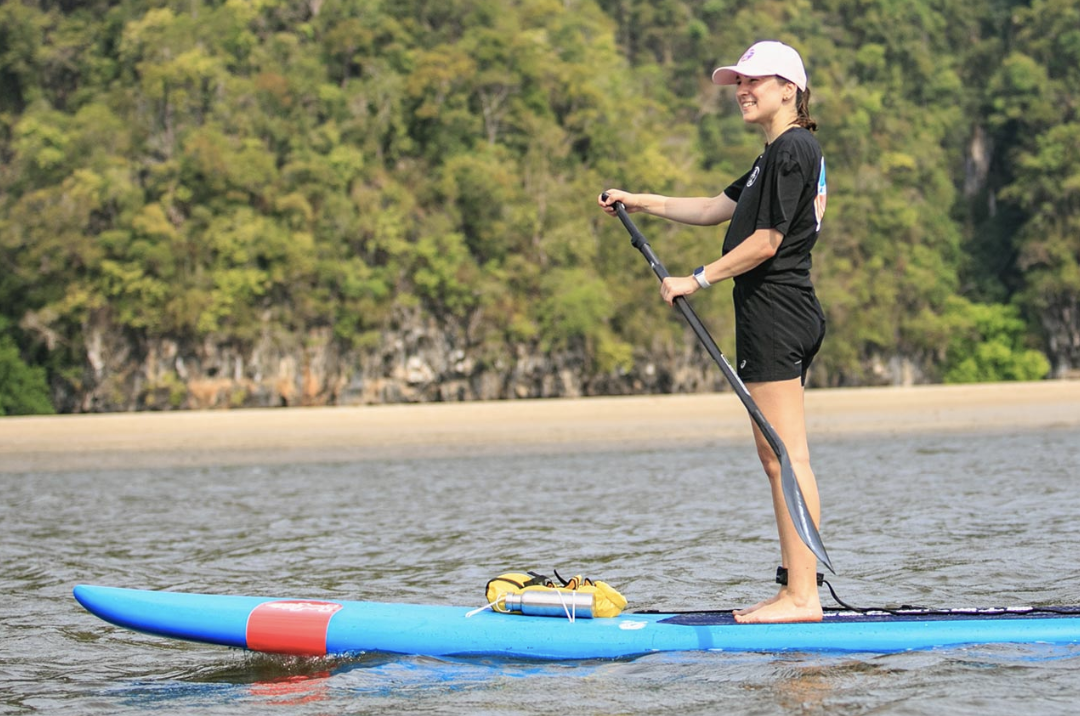
If you've been wondering whether stand-up paddle boarding is easy in Cocoa Beach, the answer is yes — with the right conditions, the right equipment, and a little local guidance before you launch.
SUP is one of the most flexible ways to get out on Florida's water. It can be as mellow or as adventurous as you want it to be. Cruise calm lagoon water on a sunrise paddle, build skills over time, or eventually graduate to your own gear — the door's wide open. The only things that really stand between you and a great first session are the right board for your body and the right launch for the day. That's where we come in.
If you can walk, you can stand-up paddle board in Cocoa Beach. We're here to help you with the rest.
Ready to Paddle Board in Cocoa Beach?
Stop by Epic Boardsports in Cocoa Beach, book a SUP lesson or paddleboard rental online, or call or text us at 321-406-1964.
Want a guided experience with local scenery and wildlife? Reserve a SUP eco-tour and explore the calmer lagoon-side waterways with a local guide.
Not sure which option fits your day? Contact us and we’ll help you choose the right board, launch, and conditions before you hit the water.
Book a SUP Lesson | Reserve a Paddleboard Rental | Explore SUP Eco Tours

Comments
Be the first to comment...