How Long Does It Take to Learn Paddle Boarding in Cocoa Beach?
- Posted on
- By Megan Timmer
- Posted in Cocoa Beach Activities, Learn Paddle Boarding, Paddle Boarding Cocoa Beach, Stand Up Paddle Florida, SUP Beginner Guide
- 0
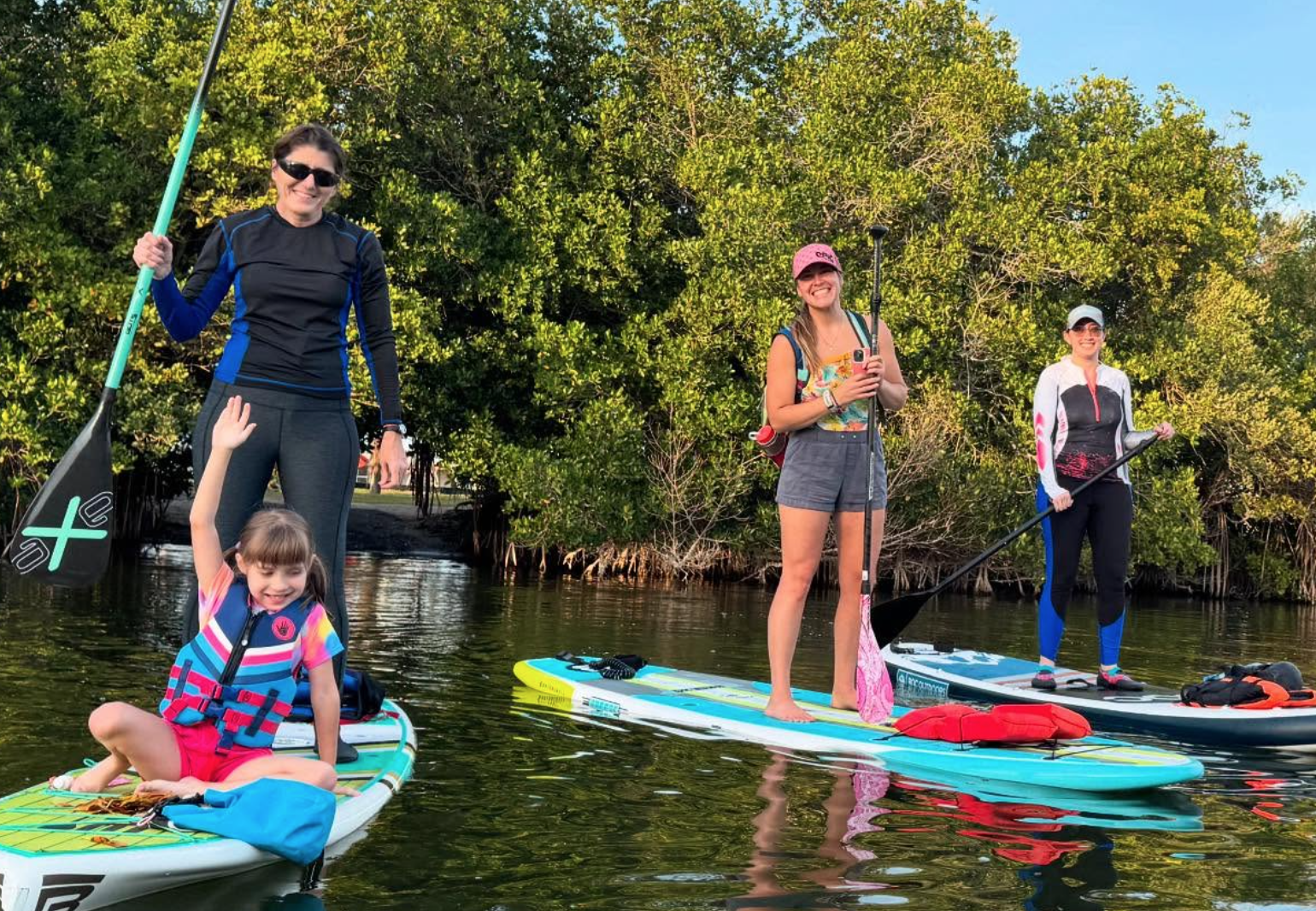
You can learn the basics of paddle boarding in Cocoa Beach in a single day if your goal is to stand up and paddle in calm water. This guide breaks down what your first session looks like, what speeds up or slows down progression, and why flatwater spots like the Banana River Lagoon make learning easier. It also explains when a lesson helps, what to expect as a beginner, and how to get started quickly with the right setup and conditions.
How Long Does It Take to Learn Paddle Boarding in Cocoa Beach?
If you’re visiting Cocoa Beach or live nearby and wondering how long it takes to learn paddle boarding, here’s the honest answer.
If your goal is to get out on the water, clear your head, and go for a paddle instead of a walk, you can be doing that your first day.
That’s what most people are actually looking for. Not racing, not surfing waves, just getting out there and moving across the water.
With the right board, the right conditions, and a calm spot around Cocoa Beach, you can get up and move without a long learning curve. You don’t need a long ramp-up or weeks of practice to get started.
In this guide, we’ll walk through what that first day looks like, what can slow you down or speed it up, where people actually go to learn around Cocoa Beach, and when it makes sense to get help versus figuring it out on your own.
Can You Really Learn to Paddle Board in One Day in Cocoa Beach?
If your goal is to get on the water and paddle, that can happen in a single day. That’s the baseline most people hit when they start in the right conditions.
What does Progression on SUP look like day by day?
✔ Day 1: Standing, balancing, and paddling short distances
✔ 2–3 sessions: Moving comfortably, turning, covering more distance
✔ Ongoing: Dialing in efficiency, exploring new spots, handling wind or light chop
Where you learn matters. Around Cocoa Beach, the Banana River Lagoon is one of the easiest places to start. The water stays flat and predictable. You’re not fighting waves or current, so you can focus on balance and basic paddling right away.
⤷ Equipment also plays a big role. A wider, more stable board gives you a solid platform from the start. The wide board makes it easier to figure out the mechanics and is a bit more forgiving. Less wobbles, more learning. That’s why beginners tend to stand up and start paddling within their first session when the setup is right.
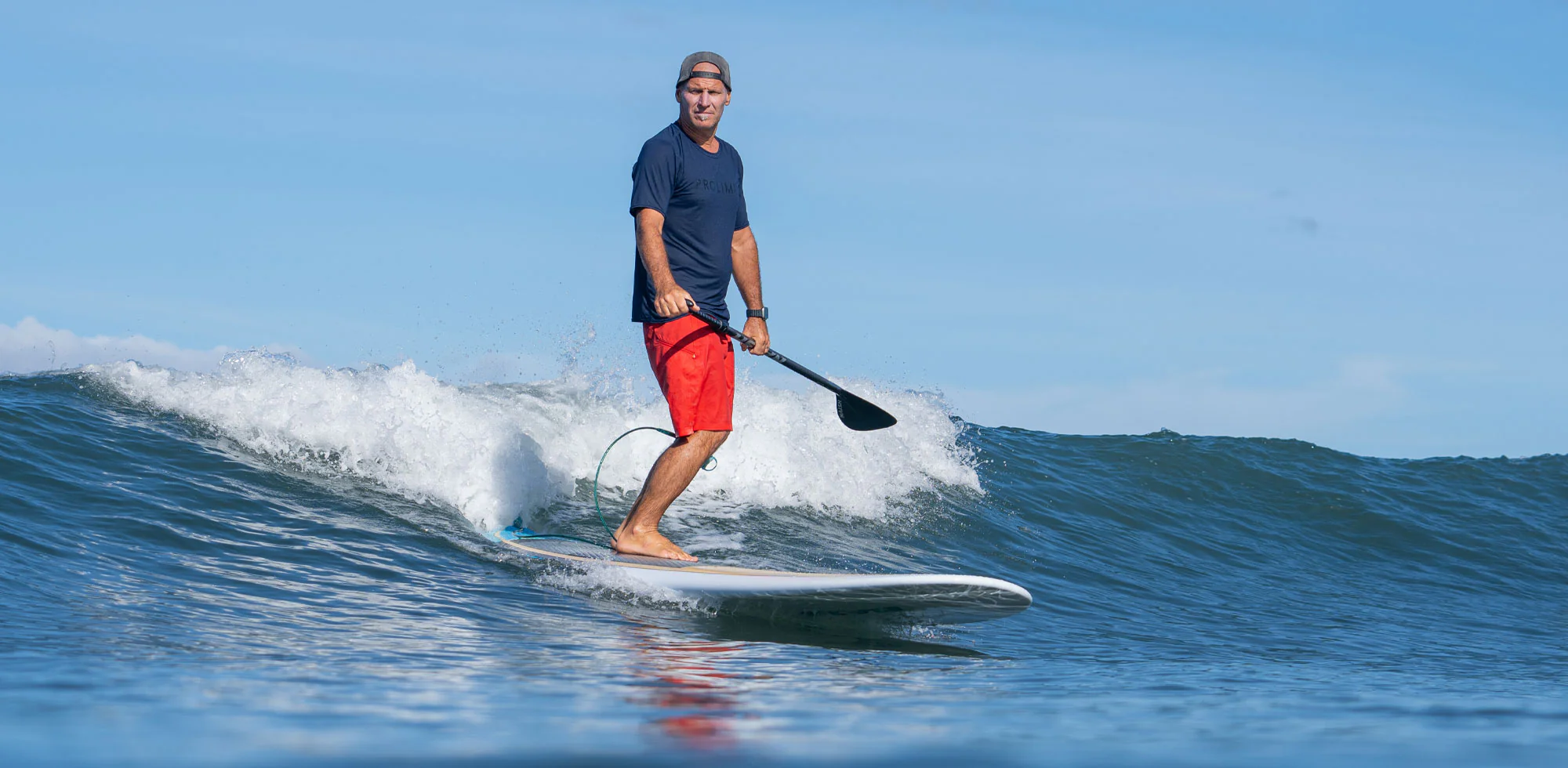
If you try to learn in the ocean, even on a small day, the water is always undulating under you. Small waves and side chop push the board around, which makes standing up and staying stable harder than it needs to be for a first session. If you start in the ocean, expect a harder first session.
⤷ At Epic Boardsports, the focus is simple. Put people on the right board, in flat water, at the right time of day. When those line up, getting up and paddling on day one is normal, not the exception.
What Does Your First Paddle Board Session Look Like?
Most first paddle board sessions follow the same basic pattern.
You usually start on your knees first. That gives you a chance to feel how the board moves under you, get comfortable with the paddle, and drift out of shallow water without trying to stand too early.
Once the board feels steady, you bring one foot up at a time and stand from the middle of the board. That is where balance starts to make sense. Your feet are planted, your knees stay slightly bent, and your eyes stay up instead of looking straight down at the board.
From there, the first goal is not speed. It is staying relaxed, taking a few clean strokes, and learning how the board responds when you paddle on each side.
Here is what most people notice during that first session:
• The board feels a little shaky at first
• The first few strokes can throw your balance off
• After a few minutes, your body starts adjusting
Once you stop stiffening up, the board feels much more stable
Instability shows up early, not throughout the session.
Around Cocoa Beach, flat mornings make this easier. In calm water, you are learning one thing at a time instead of trying to deal with chop, boat wake, or stronger afternoon wind at the same time.
⤷ For most beginners, the first session is not about mastering paddle boarding. It is about getting comfortable enough to stand, paddle, and understand that the sport is more approachable than it looked from shore.
What Makes Paddle Boarding Easy to Learn in Florida Compared to Other Places?
Jennifer from Epic Boardsports puts it simply:
“If you can walk, you can stand up paddle.”
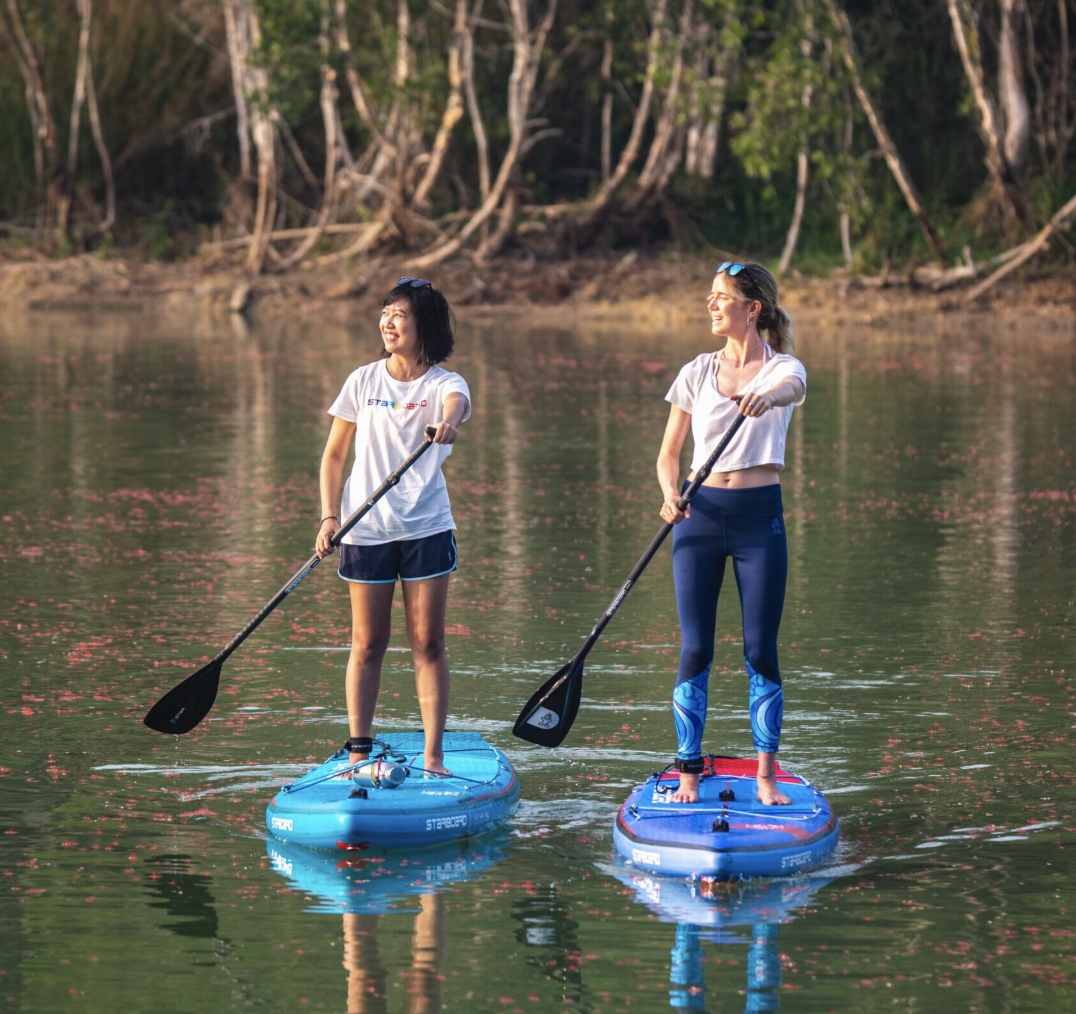
In areas around Cocoa Beach, you are not dealing with cold water, strong current, or unpredictable surface conditions. You are stepping into warm, shallow zones where falling in is not a big deal, and getting back on the board is easy.
Spots like the Banana River and the Thousand Islands stay protected from heavy wind and boat traffic, especially in the mornings. That gives beginners a controlled place to learn without stacking multiple challenges at once.
On many inland lakes, wind becomes the main problem. The surface gets pushed around, and beginners spend more time correcting direction than learning how to paddle cleanly.
In colder climates, People move slower, stay tense, and avoid falling in. That slows down the learning process.
Florida removes both of those barriers. You are warm, the water is forgiving, and there are consistent flatwater zones available.
How Long Does It Take to Feel Comfortable on a Paddle Board?
Comfort on a paddle board comes in stages. It is not always instant, but it also does not take long to reach a point where you can go out and enjoy it without struggling.
Most beginners expect the unstable feeling to last the entire learning process. It does not. It shows up early, then settles once your stance and paddle timing start to line up.
Standing comes first, then direction, then efficiency.
Once you can stand, paddle, and turn without falling in, you are past the beginner barrier. At that point, you are not learning how to paddle board anymore. You are just getting better at it and enjoying your time on the water.
What Slows People Down When Learning to Paddle Board?
Most people don’t struggle because paddle boarding is hard. They struggle because the setup is wrong.
Here are the three things that slow beginners down the most:
1. The wrong board size
If the board is too narrow or too small, it feels unstable from the start. That forces constant overcorrection, which leads to fatigue and frustration early in the session. A wider, higher-volume board gives you a stable platform so you can focus on paddling instead of just trying to stay upright.
2. Wind and timing
In Cocoa Beach, conditions change throughout the day. Mornings are usually flat and predictable. By the afternoon, wind picks up and creates surface chop. That movement pushes the board around and makes balance harder for beginners. Same person, same skill level, completely different experience depending on when they go out.
3. Poor posture on the board
Standing too stiff, looking down at your feet, or locking your knees throws off balance quickly. Most beginners don’t realize how much body position affects stability. Small adjustments like soft knees and looking forward make a noticeable difference within minutes.
This is where people get the wrong impression of the sport. They go out in the wrong conditions or on the wrong setup, struggle through it, and assume paddle boarding is harder than it actually is.
At Epic Boardsports, most of the learning curve gets removed by controlling those variables upfront. Right board, calm water, and a quick correction on stance. That’s usually the difference between a frustrating first session and one that actually works.
Do You Need a Lesson to Learn Paddle Boarding in Cocoa Beach?
You can figure it out on your own, especially in flat water around Cocoa Beach.
If you go self-taught, you’ll spend time dialing in board position, stance, and paddle use through trial and error. It works, but it can take a few sessions to smooth things out and figure out what adjustments you need to make.
With a lesson, most of that gets handled in the first hour. Small corrections early on prevent the common mistakes that slow people down.
One to two hours with someone who knows what to fix is often the difference between struggling through multiple sessions and getting it right from the start.
⤷ If you want to shorten the learning curve, you can check out paddle board lessons with Epic Boardsports. If not, just make sure you’re starting in calm water with the right setup. If this is your path, feel free to call us and we are happy to help guide you in the right direction.
Can You Learn Paddle Boarding on Vacation in Cocoa Beach or Orlando in One Day?
If you’re in Orlando for a few days or staying near Cocoa Beach with limited time and want something outside the theme parks, the coast is about an hour away. People make that drive all the time for a half-day change of pace. Paddle boarding fits that window.
Same if you’re already in Cocoa Beach. A lot of families walk in looking for something simple to do with their kids or a way to get out on the water without committing to a full tour or lesson.
The process is straightforward:
✔ You show up
✔ Get set up with a board and paddle
✔ Head to a calm launch spot
✔ Spend an hour or two on the water
That’s it.
Most first-timers are standing and moving around within that first session, especially in flat areas like the Banana River. Kids usually pick it up quickly, and adults tend to settle in once they stop overthinking it.
You don’t need multiple days, special conditions, or prior experience. It fits into a single morning or afternoon without turning into a project.
⤷ If you want to keep it simple, you can rent gear and go at your own pace. If you’d rather skip the trial and error, a quick session with Epic Boardsports will get everyone comfortable faster, especially if you’ve got kids in the group.
Either way, it’s one of the easier ways to get out on the water and actually do something, not just watch it from the shore.
Is Paddle Boarding Hard If You Have Bad Balance or Are Nervous About Falling?
Most people who ask this are picturing the ocean. Waves, movement, and the board getting pushed around. That’s not where beginners start.
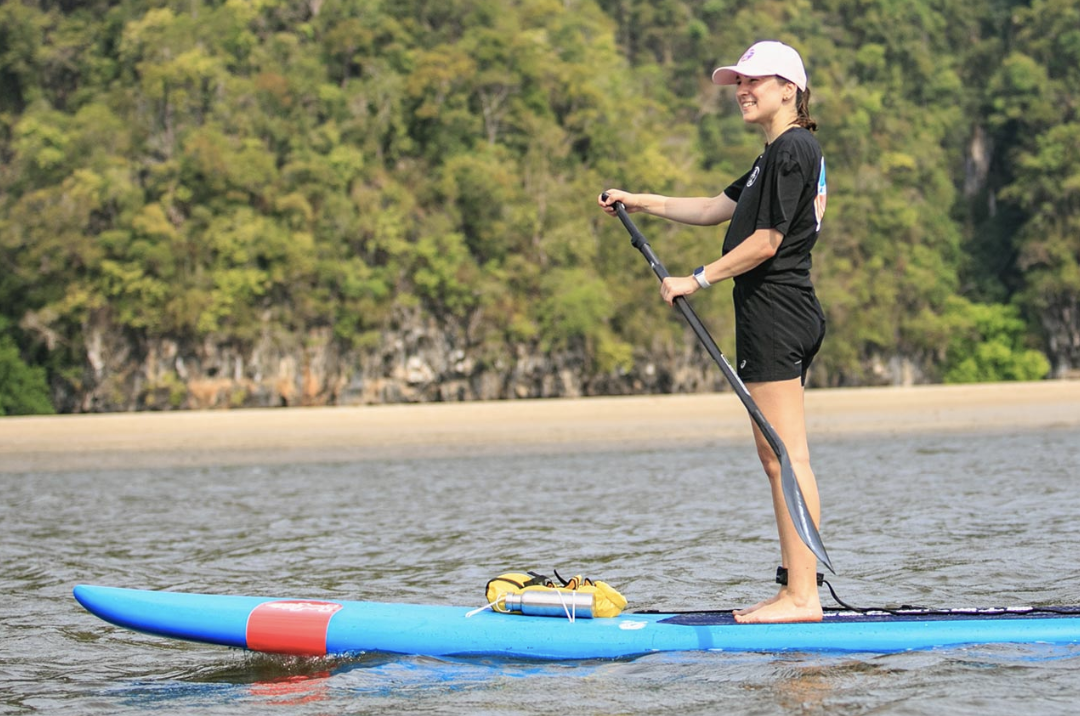
In calm areas around Cocoa Beach, like the lagoon, the water is flat and steady. The boards used for beginners are wide and stable. You’re not trying to balance on something narrow or unstable.
For a lot of older riders or anyone coming in a little cautious, the first surprise is how stable the board actually feels once you’re standing in the right position. The second is that falling isn’t happening every few minutes like they expected.
When a fall does happen, it’s usually early, while you’re figuring out your stance. After that, most people stay on the board for the rest of the session.
The hesitation usually comes from not knowing what it’s going to feel like. Once you’re out there in flat water, it’s a controlled environment, not a high-risk one.
If you want to make it even easier, starting in a protected area with the right board setup helps remove most of that uncertainty. That’s why a lot of first-timers go through Epic Boardsports. They keep it simple and set people up in conditions that work.
You don’t need perfect balance to start. You just need a stable setup and a calm place to try it.
Can Kids and Families Learn Paddle Boarding Together in Cocoa Beach?
Paddle boarding works well for families because everyone can participate at their own level without needing separate setups or advanced skills.
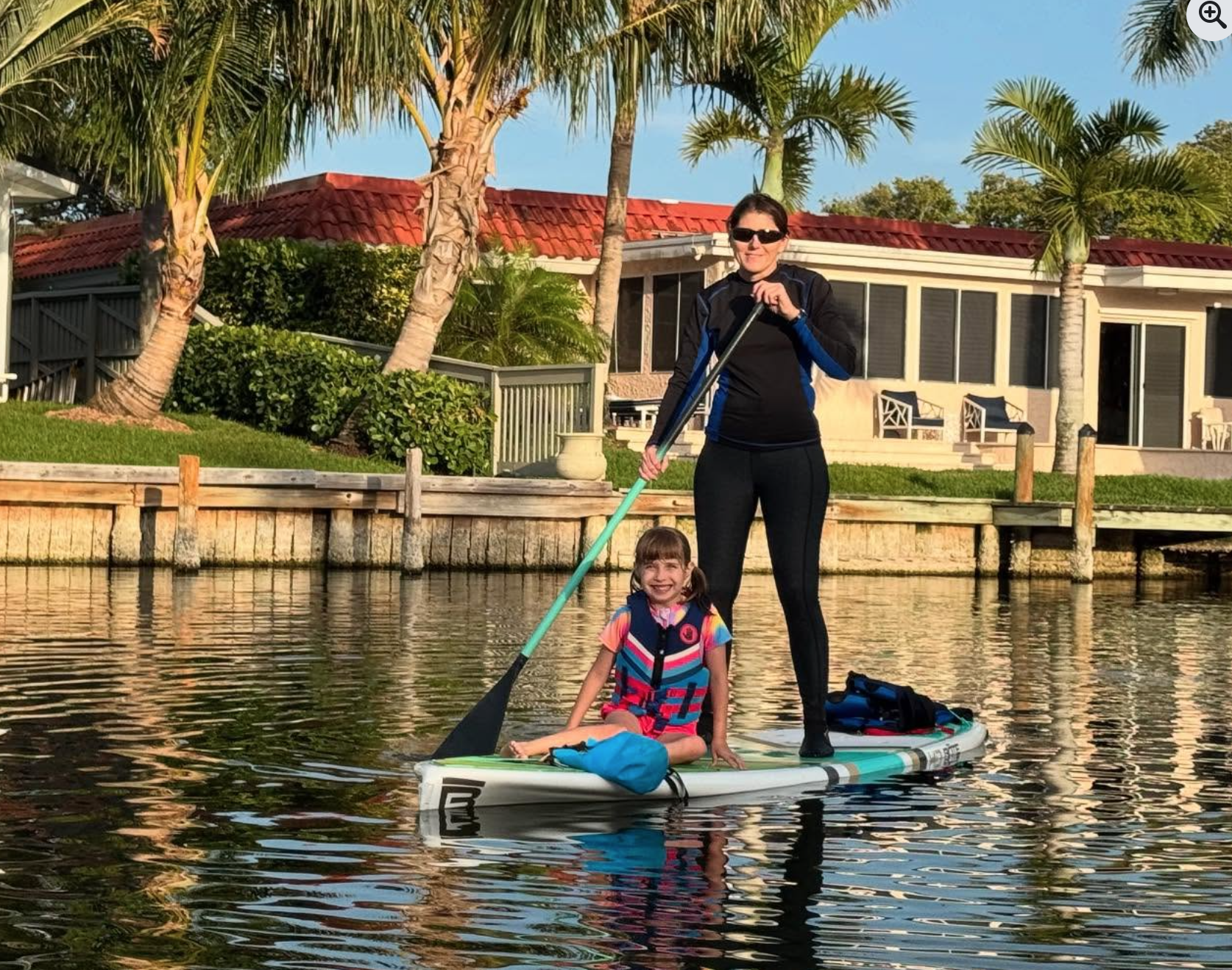
Kids usually pick it up quickly. They’re less rigid, they don’t overthink balance, and they adapt to the board faster than most adults. It’s common to see them standing and moving around within the first part of a session.
For younger kids or anyone not ready to stand, tandem paddling is an easy option. One person paddles while the other rides up front, then they can switch once they get more comfortable.
Safety comes down to where you go. Around Cocoa Beach, there are shallow, protected areas where you’re not dealing with waves, strong current, or boat traffic. That gives families a controlled space to stay close together and move at their own pace.
At Epic Boardsports, most family groups are set up with stable boards and directed toward those calmer launch spots. That keeps the focus on the experience instead of managing conditions.
What Is the Best Place to Learn Paddle Boarding Near Cocoa Beach?
The best place to learn is flat, protected water. That’s what removes most of the frustration for beginners.
Around Cocoa Beach, a few spots consistently work:
✔ Banana River Lagoon
This is the go-to. The water stays flat, there’s very little current, and you’re not dealing with waves. It gives you a controlled environment to stand up, paddle, and figure things out without getting pushed around.
✔ Ramp Road Park (Cape Canaveral)
Easy launch, shallow entry, and access to wide open flatwater. Good for beginners who want space and simple conditions.
✔ Thousand Islands (Cocoa Beach)
More sheltered, slower-moving water with mangrove channels. It’s calm, quiet, and adds a different feel once you’re comfortable standing and paddling.
All three have the same advantage. They let you learn in predictable water instead of reacting to constant movement.
This is where Epic Boardsports separates from just renting a board and guessing. They’ll point you to the right launch based on wind, time of day, and your experience level.
Same gear, different spot, completely different experience.
Ready to Get on the Water?
If you’re thinking about trying paddle boarding, the easiest way to get started is to do it where people know the conditions.
At Epic Boardsports, you’re not just renting a board and guessing where to go. You’re getting real guidance from people who are out there every day. They know when the water is flat, where to launch, and what setup will actually work for you.
That local knowledge is what Nic Reeser pointed to when he talked about Epic. It’s not just gear. It’s being connected to people who understand the water and help you get it right the first time.
If you want a smooth first session, stop in, get set up, and go paddle.
FAQ About Learning Paddle Boarding in Cocoa Beach
▼Can I learn paddle boarding in one day?
Yes. Most beginners can stand up and paddle in flat water during their first session.
▼Is paddle boarding hard for beginners?
No. It feels unstable at first, but once your stance and paddle timing settle, it becomes manageable quickly.
▼Do I need lessons to start paddle boarding?
No. You can learn on your own, but a short lesson speeds up the process and helps avoid common mistakes.
▼Where is the calmest water in Cocoa Beach?
The Banana River Lagoon and areas like Thousand Islands offer the most consistent flat water for beginners.
▼What should I wear paddle boarding in Florida?
Swimwear or quick-dry clothing. Most people go barefoot and use sunscreen or a rash guard for sun protection.
▼Can I paddle board if I’ve never done water sports?
Yes. No prior experience is needed. Paddle boarding is one of the easiest ways to get started on the water.
▼What time of day is best for beginner paddle boarding?
Mornings. Wind is lighter and the water is usually flatter.
▼Will I fall in a lot when learning?
Usually no. Most falls happen early, and many beginners stay on the board once they find their stance.
▼Are paddle boards stable for older beginners?
Yes. Wider boards used for beginners are designed for stability and are commonly used by all age groups.
▼How long should my first paddle boarding session be?
About one to two hours. That’s enough time to learn the basics without getting fatigued.
Summary
You can learn to paddle board in a day if your goal is to stand up and paddle in calm water. That’s the starting point most beginners reach in their first session.
Florida makes that easier. Warm water, flat lagoons, and predictable conditions remove the common barriers that slow people down in other places.
Epic Boardsports speeds up the process by getting you on the right board, in the right spot, at the right time. That removes guesswork and gets you up and paddling faster.

Comments
Be the first to comment...