
Can you see dolphins and manatees paddle boarding in Cocoa Beach?
- Posted on
- By Franco Omega Tremsal & Rygo Labs
- Posted in Banana River Lagoon, Cocoa Beach Wildlife, Dolphins & Manatees, Paddle Boarding, SUP Eco Tours
- 0
Can you see dolphins and manatees while paddle boarding in Cocoa Beach? Explore the Banana River Lagoon and Thousand Islands, learn when wildlife is most active, how to spot manatees from a SUP, and how to observe dolphins and manatees responsibly.
Yes, you can see both dolphins and manatees while paddle boarding in Cocoa Beach. The Banana River Lagoon and Thousand Islands give you a chance to see them while exploring the quieter side of town. Look for light wind and calm water, and give yourself time to notice what's moving around you. Sightings are never guaranteed.
I love the marine mammals, of course, but I'm a bird nerd at heart too. Especially in winter, when the migratory birds are here, there's a lot to watch even when a dolphin hasn't made an appearance.
Where should you paddle to look for dolphins and manatees?
Start by looking at the lagoon side of Cocoa Beach. Around the Thousand Islands, you can explore mangrove-lined waterways without making an ocean paddle part of the plan. For someone who wants a relaxed wildlife outing, that's a good place to begin.
Ramp Road Park is a public access point for the Thousand Islands Conservation Area. From there, your route should depend on the wind, your paddling experience, and how comfortably you can find your way back. The islands aren't a marked procession of wildlife stops. You don't need to visit every channel.
Before choosing a launch, look through our guide to the calmest places to paddle in Cocoa Beach. Shelter can change from one part of the lagoon to another. A quiet corner at the launch doesn't tell you what the open water farther out is doing.
What time of day gives you a good chance of seeing wildlife?
I like earlier in the morning or later in the evening. We often see dolphins active and feeding during those parts of the day, and you're avoiding some of the midday heat too.
But I would look at the wind before choosing a time just because it sounds good. On smooth water, a small movement stands out. When the surface is covered in chop, you can paddle right past something without noticing it.
Our guide to the best time of day for paddle boarding goes further into the local conditions. For a wildlife paddle, leave some room in your schedule. An evening outing still needs suitable weather and enough daylight to return, and a morning forecast still needs checking.
How do you spot a manatee from a paddleboard?
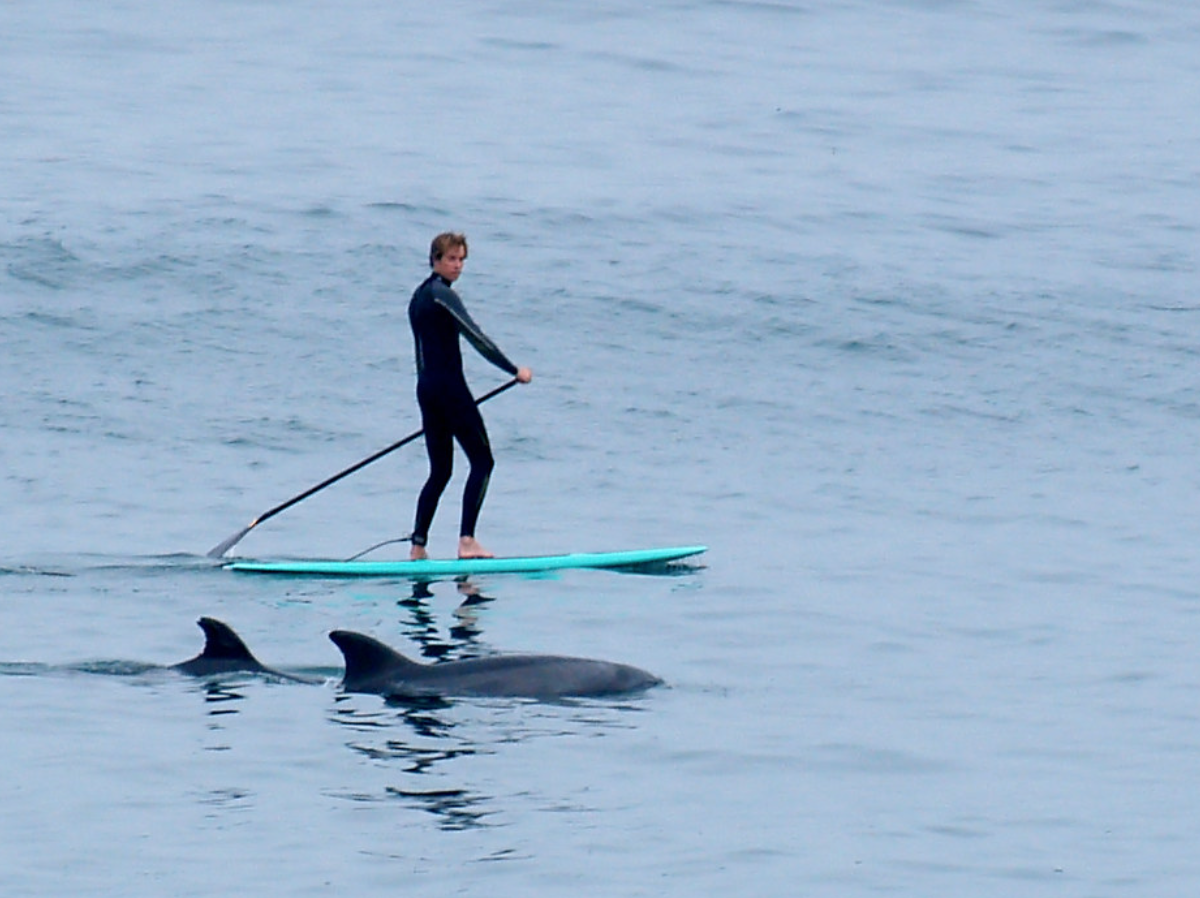
Watch the surface rather than waiting for a whole animal to appear. A manatee can give itself away with a nose coming up for air, part of its back, or a movement from its broad tail. Sometimes the first thing you notice is a smooth swirl in otherwise still water.
That's why I keep coming back to lighter wind. The quieter the surface, the easier those little changes are to see. Polarized sunglasses can also help you see below the glare.
The Florida Fish and Wildlife Conservation Commission's viewing tips explain what to watch for and how to leave manatees undisturbed. If you notice one nearby, slow down and leave it room. Spotting the animal isn't a reason to paddle over it.
Dolphins tend to be easier to notice when they're moving at the surface. Watch from where you are instead of trying to keep up as they travel.
Is winter the best time to see manatees in Cocoa Beach?
Winter is a lovely time to look for migratory birds here, but it doesn't automatically make every local paddle a better manatee trip.
Manatees move in response to water temperature. FWC explains that they seek warmer water as temperatures fall, especially below about 68°F. That means a cold spell can change where they spend their time. A sheltered mangrove channel isn't necessarily a warm-water refuge.
So keep the season in mind without treating it as a promise. You can have a rewarding paddle watching birds and exploring the lagoon even when the manatees are somewhere else that day.
How close should you get to dolphins and manatees?
Give them room to carry on with what they were doing. That includes feeding, resting, surfacing, and moving through a channel.
For dolphins, NOAA recommends watching from at least 50 yards away, about 150 feet. Don't follow them, cut across their path, or try to draw them toward your board.
With manatees, FWC's practical guidance is to stay far enough away that your presence doesn't change their behavior. Don't surround one with boards or get between a mother and calf. Keep hands, paddles, food, and drinking water to yourself, even if an animal comes closer on its own.
Use your camera's zoom. A good sighting doesn't need to become an interaction.
Should a beginner rent a board or go with a guide?
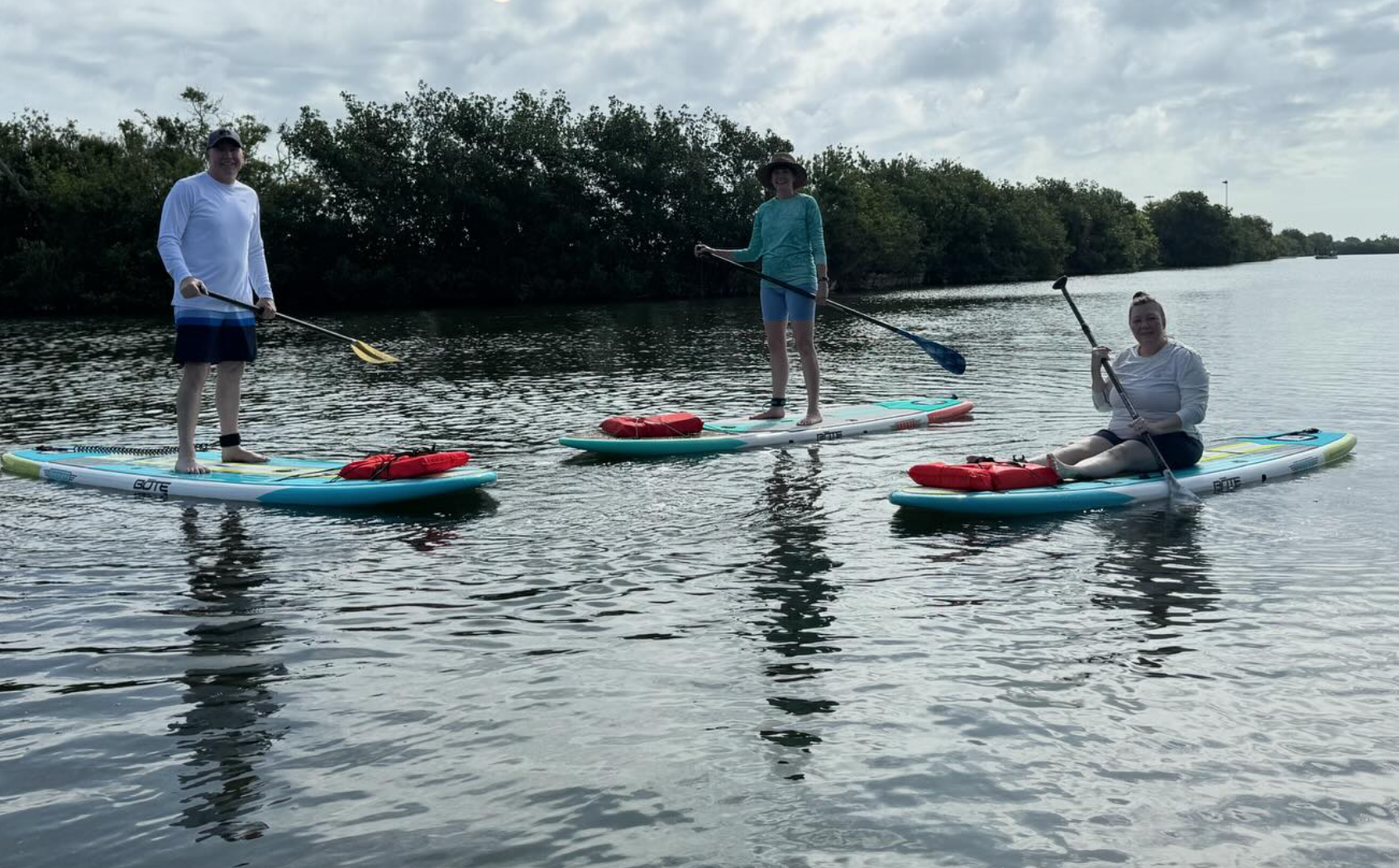
A beginner can enjoy a wildlife paddle, but you need enough attention left over to steer, watch the weather, and know where you're going. If you're still working hard just to stay balanced, looking for a manatee adds another thing to think about.
A guided outing can help with the route and local surroundings. If learning how to paddle is your main concern, our lesson-versus-rental guide will help you decide how much support you want.
You don't need to cover a long distance to make the outing worthwhile. Choose a manageable route and let the wildlife be a welcome part of the paddle.
What else should you know before a wildlife paddle?
Can you see dolphins on the ocean side too?
Yes, dolphins also occur along the ocean coast. Seeing one there doesn't make the Atlantic the right place for your first paddle, though. Waves, shorebreak, and exposure change the outing. Our ocean-versus-lagoon guide explains how to choose between the two.
Can you bring children on a wildlife paddle?
Talk through the setup first, including each child's comfort around water, properly fitted flotation, and whether they'll paddle independently or ride with an adult. Our family paddle boarding guide covers those choices. Keep the route manageable and don't make the day's success depend on seeing a particular animal.
How can Epic help you plan a wildlife paddle?
If you'd like company on the water, take a look at our guided paddleboard eco tours. We'll help you explore the local waterways, with time to notice what's around you.
Planning Your Own Wildlife Paddle?
Call or text us at 321-406-1964 and tell us who's coming, your paddling experience, and when you'd like to go. We'll help you choose the right equipment and a sensible starting point for the day's conditions.

Comments
Be the first to comment...