
Ocean vs. Lagoon Paddle Boarding in Cocoa Beach: Where Should Beginners Start?
- Posted on
- By Franco Omega Tremsal & Rygo Labs
- Posted in Banana River Lagoon, Beginner SUP, cocoa beach, Paddle Boarding, SUP Surfing
- 0
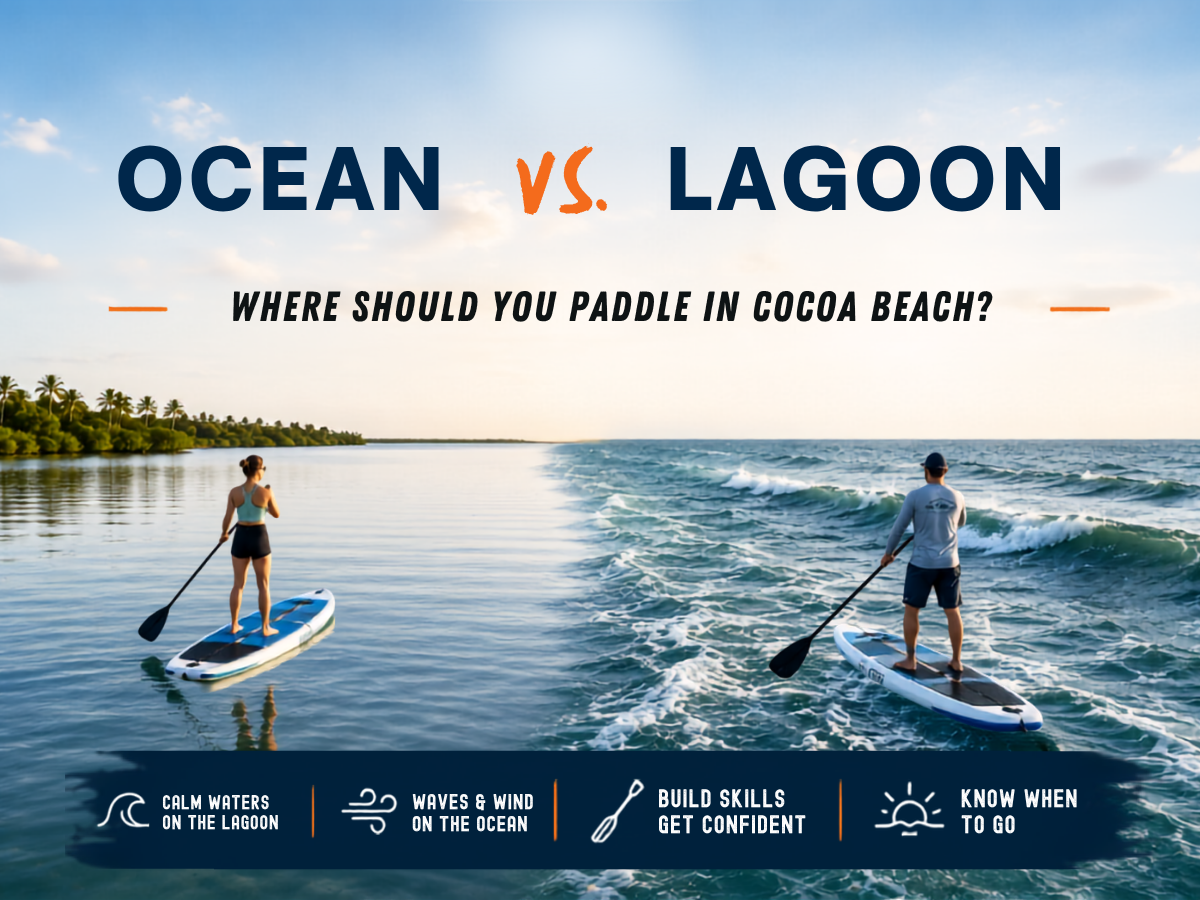
Learn the difference between paddle boarding on the ocean and the Banana River Lagoon in Cocoa Beach. Jennifer from Epic Boardsports explains why beginners should start on calm flat water, how those skills transfer to ocean paddling, when to try your first wave, and whether you need a different board for each environment.
We do recommend starting on the lagoon. That's true even if the ocean is the whole reason you're curious about this.
It's a question we get quite frequently, from people standing here in the shop and from paddlers all over. We're blessed here to have both environments. Atlantic on one side, Banana River Lagoon on the other, and the barrier island keeping the back side quiet on the days the beach side isn't.
If you're dropping a pin before you get here, we've laid out the calmest, most protected launches in Cocoa Beach separately.
If you know you want to get out on the ocean side and catch waves one day, we're here for that. We encourage it. We're not going to talk you out of it. We just want to give you the simplest path, and the one that builds the most confidence.
If you'd rather talk it through, call or text us at 321-406-1964 and we'll tell you which side is worth your time this week.
What's different about paddling the ocean side in Cocoa Beach?
The lagoon mostly holds still. The ocean doesn't.
On a calm morning on the Banana River, the only thing moving is you. On the beach side the water is moving under your board the whole time you're out there.
Getting out is the first thing you'll meet. On a beach like ours the waves break in close, so there's a stretch between the sand and the clear water where you're walking the board out and timing your move onto it. Most people are fine once they're past it, usually while they're still finding their feet.
Then there's wind. On the lagoon you've got the island behind you and can nearly always tuck into a corner out of the breeze. On the Atlantic there's nothing in the way of it.
And you drift. Between the wind and the current running along the beach, you can look up after twenty minutes and be a long way down the shoreline from where you parked. You just have to keep half an eye on where you started, which is one more thing to think about while you're trying to stay upright.
Not harder. Just more going on at once.
What does paddling flat water give you when you finally go to the ocean?
Everything you learn out on the river comes with you.
You're not doing a different sport over there. Balance, your stance, using the paddle properly instead of dragging it, reading what your board is doing underneath you. All of that is the same skill on the beach side. You'll just be using it while the water moves.
Get that foundation on flat water and you show up to the ocean with one new thing to learn instead of five.
You also can't dial up conditions. Some weeks the ocean is flat and there's nothing to ride, and if the beach side is the only paddling you do, those are weeks you sit out. Going out on the river anyway keeps you paddling and keeps those muscles strong for when the waves do arrive.
How long that takes is different for everybody. We've written up how long it takes to get comfortable on a board if you want a realistic picture.
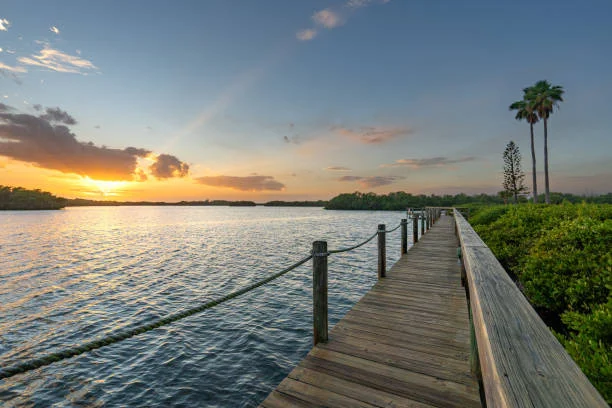
How do you know when the ocean is worth trying in Cocoa Beach?
Watch the wind direction. That tells you more than how long you've been paddling.
When the wind is out of the north, the south side of the jetty at Jetty Park stays clean and rideable while the rest of the coast is getting knocked around. It's the best shelter we've got on a windy day, and it's why winter is the better season to go looking for your first ocean paddle here.
Jetty Park is also the spot we'd point you to for a first go. The bottom is shallow and hard-packed, so the waves break in a predictable, mellow way instead of dumping. That's about as forgiving as ocean paddling gets around here. There's an entry fee, and you get showers and bathrooms for it, which is worth something after a session in salt water.
If you'd rather not pay, Cherie Down is free and works on the same north wind, though it's rougher and less consistent.
There's more coast than this. We've mapped the full map of where to paddle on Florida's East Coast if you're driving to find water.
Do you need a different board for the ocean than the lagoon?
Not at the start. One board can cover both sides.
The Whopper is the one we point at most often for that. It's 34 inches wide, so it feels planted the second you stand up, with enough shape in the rails and tail that it'll still turn on a small wave. You can paddle the Banana River all week and take the same board to the beach on a mellow day without swapping anything.
If there's even a small part of you that thinks you might want to catch a wave one day, that's the board to start on.
A flatwater-first shape like the Go Surf leans further into comfort, with a flat deck that doesn't wear your feet out on a long cruise and plenty of volume under you. It'll handle a small wave, since the nose is thinner and there's more rocker than a pure cruiser has, but that isn't what it's built around. Go further toward the surf end and boards get shorter and narrower, and you start trading away the stability you're still leaning on.
Most of these shapes take a quad fin setup, which gives you more grip when a wave is moving under you. On the river you'd barely notice.
You'll know which way you want to go once you've paddled a bit, and guessing before then usually costs money. You can try both kinds of board through our rentals and demos.
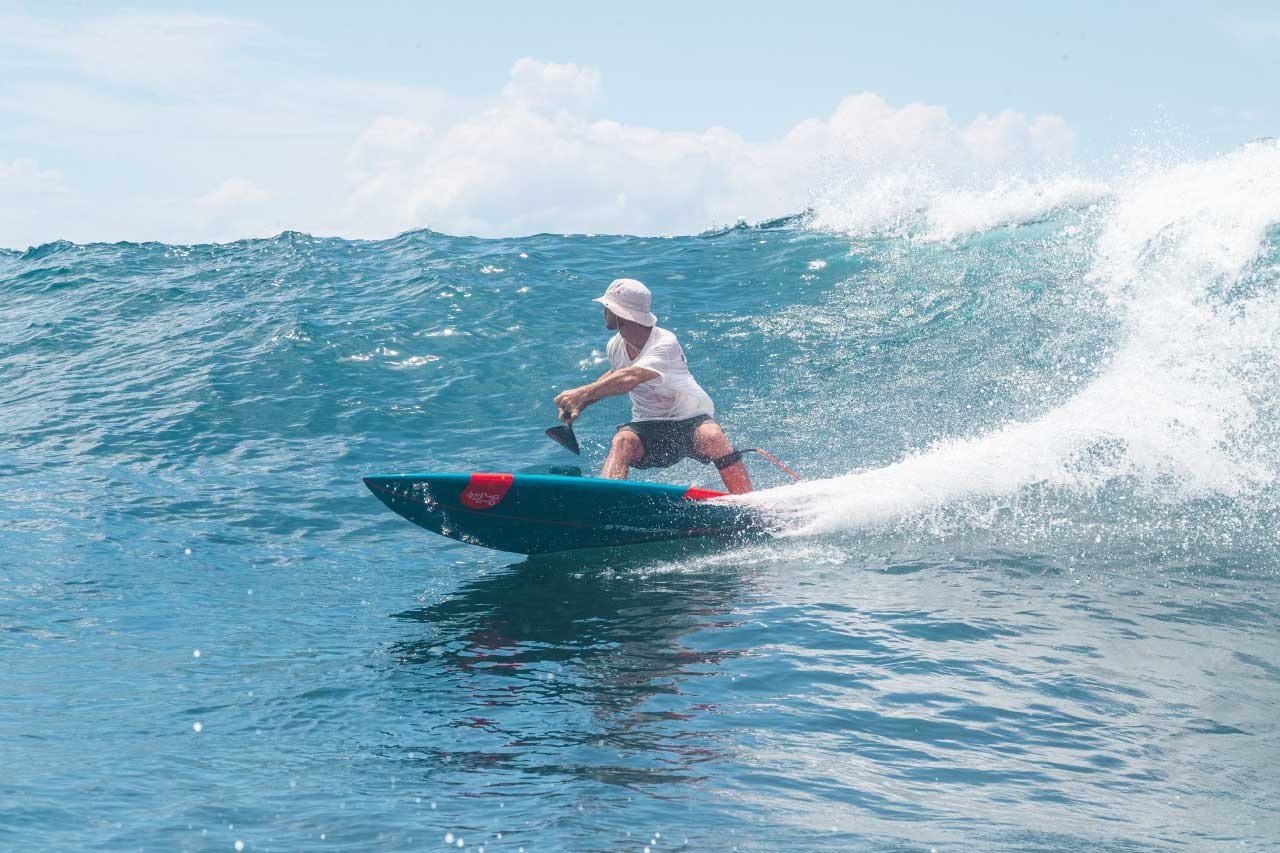
How long should you wait before trying your first wave?
Once you're steady on flat water, go.
"I waited too long. Two years into my journey, when I caught my first wave, I was like, wow, this is fun. It all catapulted from there. But I didn't have the encouraging friend until two years in."
Jennifer, Epic Boardsports
So take this as us telling you. If you've been paddling a while and the beach side keeps crossing your mind, wait for a north wind and get in.
The one time we'd say hold off is if you've never stood on a board at all. A first session with waves in it is a rough way to find out whether you even like this. Get a few paddles on flat water first, then come back to it.
If you'd rather not work it out alone, book a lesson and we'll start you on the lagoon side. We'll get the foundation in, then point you at the beach.
Frequently Asked Questions
+ Is the Banana River always calm?
No. It's protected by the barrier island, which is why it's calmer than the beach side most of the time, but it's wide open in places and the wind builds through the day. Mornings are the safest bet. Ramp Road is the one launch where you can find shelter whatever direction the wind is coming from.
+ Do you need to know how to surf to SUP surf?
No. They're different enough that surfing experience doesn't carry over as much as people expect, and plenty of paddlers catch their first wave without ever having surfed. What matters more is being steady on the board and comfortable in moving water.
+ What time of year is best for ocean paddle boarding in Cocoa Beach?
Winter. North winds are more common, and a north wind is what makes the south side of the jetty at Jetty Park clean enough to paddle. Summer is generally flatter on the beach side, which is fine for a cruise but means less to ride.
+ Do you need a leash to paddle board in the ocean?
Yes. In moving water a board gets away from you fast, and a loose board in the surf is a hazard for whoever's nearby. It matters less on flat water, though it's still worth wearing.
So Where Should You Start?
Start on the lagoon. Get steady, get your technique in, and let it build for a few sessions.
Want Us to Tell You Which Side Is Working This Week?
Call or text us at 321-406-1964 and we'll tell you whether the lagoon or ocean is the better call, what the wind is doing, and where we'd paddle that day.
Already in Cocoa Beach? Stop by 358 N Orlando Ave and we'll walk you through the local spots on our marine map.

Comments
Be the first to comment...